
 Floor Hendriks
In an age when we are inundated with (online) information, the ability to think critically is more important than ever. But what exactly does critical thinking mean in a professional context? And how do you measure this skill? In this article, we’ll take a deeper dive into the theory behind critical thinking and explore how the Watson Glaser assessment test helps organizations select and develop talent.

The Fundamentals of Critical Thinking
Critical thinking is more than just logical reasoning. It encompasses a range of cognitive skills that enable us to analyze and evaluate information and draw well-considered conclusions from it. At its core, critical thinking revolves around:
- The ability to distinguish facts from opinions
- Recognizing assumptions and biases
- Evaluating the quality of arguments
- Drawing logical conclusions based on available data
These skills are not only valuable in academic settings but also form the foundation for effective decision-making in virtually any professional setting.
Why Critical Thinking Is So Important
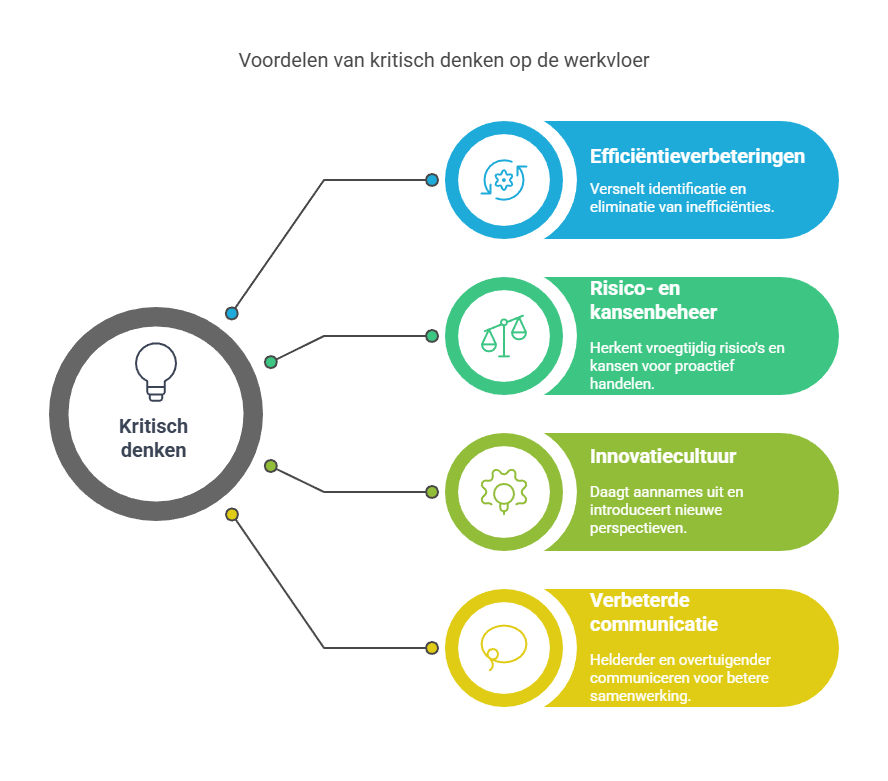
Today’s job market demands professionals who can solve complex problems and make well-considered decisions. Employees with strong critical thinking skills bring significant benefits to organizations:
They identify and eliminate inefficiencies more quickly, leading to cost savings and improved processes. In addition, they recognize potential risks and opportunities earlier than others, allowing them to act proactively rather than reactively.
Critical thinkers also contribute to a culture of innovation by challenging existing assumptions and introducing new perspectives. They generally communicate more clearly and persuasively, leading to more effective collaboration.
The Watson Glaser Assessment: A Reliable Measurement Method
Measuring critical thinking skills is not easy. Subjective assessments often fall short, and standard job interviews offer limited insight into this complex skill. This is where the Watson-Glaser assessment test comes in.
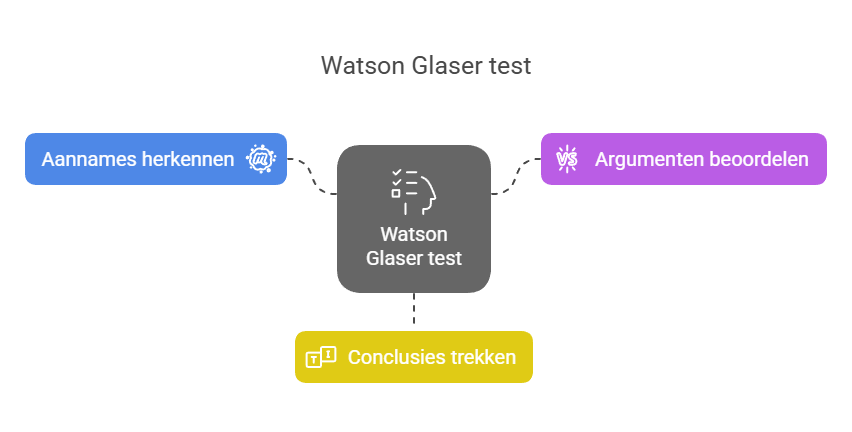
The Watson Glaser test is a scientifically validated instrument specifically designed to measure critical thinking. The test focuses on three core components that together form the foundation of critical thinking:
- Recognizing assumptions: The ability to identify implicit assumptions in arguments.
- Evaluating arguments: The ability to distinguish between strong and weak arguments.
- Drawing conclusions: The ability to make logical inferences based on given information.
By systematically evaluating these components, the test provides an accurate picture of a person’s critical thinking abilities.
Practical Applications Across Various Sectors
Although the Watson-Glaser test originated in legal selection processes, the tool is now widely used. It is particularly valuable in sectors where decisions can have major consequences:
In the consulting world, the test helps identify consultants who can unravel complex business problems and develop effective solutions. Financial institutions use the test to select professionals who can accurately assess risks and make sound investment decisions.
In the healthcare sector, the test helps identify managers who can effectively navigate complex healthcare issues. Technology companies also use the test to find innovators who can think outside the box.
Developing Critical Thinking Skills
An important insight from research on critical thinking is that this skill can be developed. The Watson-Glaser test offers not only a measurement tool but also a development framework. After taking the test, candidates receive a detailed development report with practical tips for further strengthening their critical thinking skills.
This makes the test valuable not only for selection processes but also for internal development programs. Organizations can use the results to offer targeted training and support employees in improving their critical thinking abilities.
The Watson Glaser III: The Latest Evolution
The most recent version, the Watson Glaser III, offers several improvements over previous versions. The test is item-banked, meaning that each candidate receives a unique set of questions drawn from an extensive database. This increases reliability and prevents potential bias.
The test is available in several languages, including Dutch, English, French, and Spanish, which broadens its international applicability. With a 30-minute time limit, the test can also be efficiently integrated into selection procedures.
Conclusion: Investing in Critical Thinking
In a complex, rapidly changing world, critical thinking is not a luxury but a necessity. Organizations that invest in measuring and developing this skill are preparing themselves for the challenges of tomorrow.
The Watson Glaser Assessment Test offers a scientifically validated method for evaluating and developing critical thinking skills. By using this tool in selection and development processes, organizations lay a solid foundation for better decision-making and sustainable success.
Would you like to learn more about how the Watson Glaser assessment test can help your organization identify and develop critical thinking skills? Visit our detailed product page for more information and purchasing options.
Put this insight into practice
Take the assessment directly, or discuss the right approach with a specialist.
Also interesting: Personality test: Big Five · Motivational drivers test · 360-degree feedback