
 Floor Hendriks
Many HR professionals are familiar with this scenario: a candidate makes a strong impression during the interview but performs differently than expected after being hired. An assessment during the hiring process helps you gain insight into a candidate’s potential, behavior, and capacity for development before hiring, so your selection is based on data rather than gut feeling.
In short
- A pre-hire assessment predicts job performance better than an interview alone
- The combination of ability, personality, and motivation provides the most reliable picture
- Assessments measure potential, not just experience
- Objective selection reduces mismatches and early turnover
- Proper use requires interpretation and discussion, not just scores
What is a pre-employment assessment?
A job application assessment is a structured evaluation of traits that, taken together, indicate a candidate’s likelihood of success in a role. It’s not about what someone has done, but about what they are likely to demonstrate in terms of behavior, performance, and development. At its core, an assessment measures three dimensions: Together, these layers form the foundation of workplace behavior. A resume describes the past. An assessment looks to the future. If you’d like to see how this works in practice, check out the page on online assessments .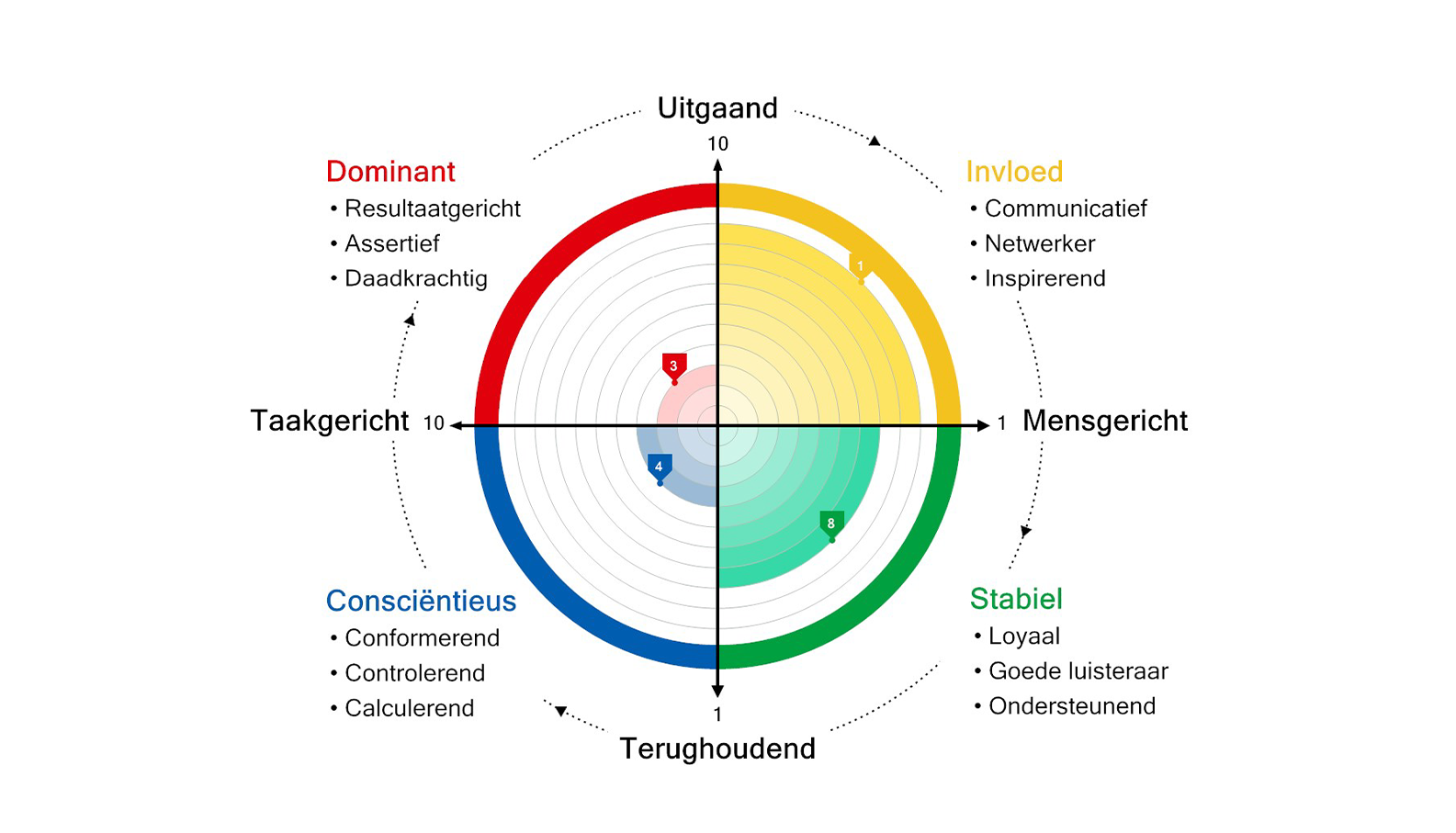
Why is an assessment more reliable than a job interview?
Interviews are prone to bias. Sympathy, self-confidence, and communication style strongly influence judgment-often unconsciously. An assessment:- objectively compares candidates
- looks beyond background or networks
- highlights patterns in thinking and behavior
What types of assessments are used in the hiring process?
Various types of assessments are conducted.What does an aptitude test measure during a job application?
An aptitude test measures the ability to process new information, make connections, and solve problems. This ability determines how quickly someone learns and how they tackle complex tasks. Especially for positions with:- changing responsibilities
- analytical challenges
- independent decision-making
What does a personality assessment measure?
A personality assessment identifies behavioral tendencies. It shows how someone tends to act under normal circumstances and under pressure. Examples of what it reveals:- how someone collaborates
- how someone handles responsibility
- how someone responds to change
- how someone makes decisions
What does a motivation questionnaire measure?
Motivation determines why someone wants to exhibit certain behaviors. Two people with the same profile may perform differently due to differences in their motivations. A motivation questionnaire provides insight into:- what gives someone energy
- when someone stays engaged
- what demotivates someone
When should you use an assessment during the hiring process?
The right timing determines the value of the tool. In practice, there are three logical points:1. After an initial screening
You use the assessment to objectively compare several suitable candidates.2. Before the in-depth interview
The results provide input for targeted questions. You test assumptions rather than making them.3. When you’re torn between candidates
The assessment helps reveal differences that don’t come to light during interviews. Important: Never use an assessment on its own. Its strength lies in combining it with the interview.What does an assessment reveal-and what doesn’t it reveal?
An assessment tells you a lot, but not everything.What an assessment does
- provide insight into potential
- highlight development potential
- identify risks
What an assessment does not do
- guarantee behavior
- replace experience
- Take the full context into account
How do you prevent misinterpretation of assessment results?
A common mistake is reading scores literally. This leads to hasty conclusions and unjustified rejections. Proper interpretation requires:- an understanding of norm groups
- insight into the relationships between factors
- a conversation with the candidate
How does an assessment contribute to objective selection?
Objective selection means evaluating candidates based on job-relevant criteria, not on personal preference. An assessment supports this by:- standardized measurement tools
- equal starting points for every candidate
- transparent decision-making
What does this mean for turnover and performance?
Mismatch is one of the main causes of early departure. Often, this mismatch arises not from a lack of ability, but from differences in expectations, work style, or motivation. By making more accurate predictions in advance:- the likelihood of a sustainable placement increases
- the quality of onboarding improves
- the risk of attrition within the first year decreases
How do assessments fit within legal and privacy regulations?
Clear rules apply in the Netherlands. Key principles:- only assess what is job-relevant
- Be transparent with the candidate
- Do not retain data longer than necessary
- why they are taking an assessment
- what happens to the results
- who has access to the results
Frequently Asked Questions About Job Application Assessments
What exactly does a job application assessment measure? It measures potential based on ability, personality, and motivation-not just experience. How reliable are online assessments? When properly standardized and interpreted, they have high predictive value. Can you reject someone based on an assessment? Yes, provided the assessment is job-relevant and forms part of a broader decision. How long does an assessment take on average? That varies depending on the assessment’s structure. Often between 30 and 75 minutes. What if a candidate doesn’t recognize themselves in the results? Then that serves as a topic for discussion. The dialogue is part of the interpretation. Are assessments also suitable for rare profiles? Especially then. They help identify potential that isn’t evident on the resume. Can you share assessment results with the candidate? Yes. Many organizations do this during or after the interview.In conclusion: How to Use Assessments Effectively
If you want to use assessments effectively in the hiring process, follow these steps:- Determine in advance what success in the role means
- Choose tools that align with that
- Combine the results with a structured interview
- Use scores as a starting point for dialogue
- Incorporate assessment data even after the candidate starts work
Put this insight into practice
Take the assessment directly, or discuss the right approach with a specialist.
Also interesting: Personality test: Big Five · Motivational drivers test · 360-degree feedback