
 Floor Hendriks
 Conflicts at work occur in almost every team. Sometimes they’re about the substance of the work, sometimes about the division of tasks, and sometimes about behavior or communication. Many organizations don’t realize until it’s too late what lies beneath a conflict: differences in motivations, communication styles, or stress responses. By better understanding how people react in conflict situations, you can prevent escalation and help teams work together more effectively.
Key Points
- Conflicts often arise from differences in communication styles or expectations
- Team members react differently to tension, depending on their personality
- Recognizing early warning signs helps keep situations manageable
- Objective tools such as DISC or personality assessments provide insight into patterns
- Constructive conversations usually resolve issues more effectively than rigid procedures
What causes conflicts at work?
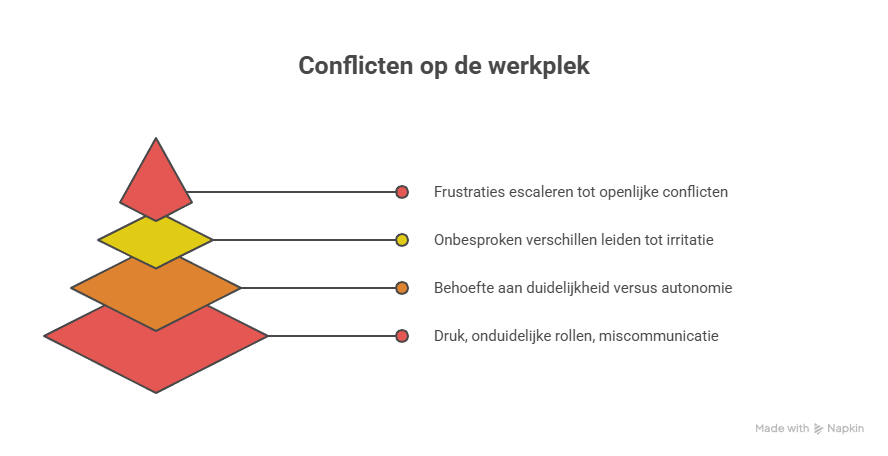
Conflicts are rarely the result of a single incident. Tension usually arises from a combination of factors such as a heavy workload, unclear roles, miscommunication, or clashing work styles. In teams where things are rarely discussed openly, small irritations build up into a larger clash. In many cases, personal preferences play a role. One person seeks clarity and structure, while another wants the freedom to make their own choices. When these differences go unaddressed, frustrations arise that lead to conflict behavior.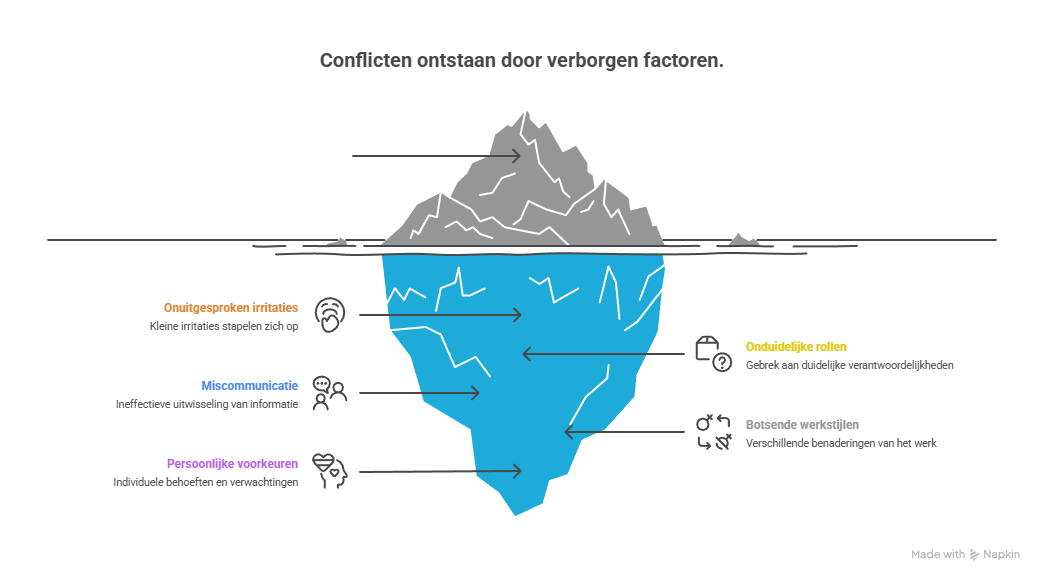
How can personality influence conflicts?
Everyone reacts in their own way when tension rises. That behavior often stems from underlying personality traits and motivations. By understanding these patterns, you can respond much more effectively in conversations or mediation. One model that many organizations use to highlight behavioral differences is the DISC methodology. It clearly illustrates how someone communicates, makes decisions, and reacts under pressure. This is based on colors. Would you like to objectively identify such behavioral preferences? Then consider the DISC test. It helps you understand why certain colleagues are more likely to seek confrontation while others are more likely to back down. For a broader picture of personality, you can use a comprehensive assessment such as the Big Fifty. It shows how someone scores on aspects such as dominance, empathy, conscientiousness, flexibility, and stress sensitivity. These insights help you understand which situations cause tension and which approach works to reduce conflicts.How do you recognize a conflict before it escalates?
Conflicts usually don’t escalate overnight. There are almost always warning signs. Consider:- Withdrawn or, conversely, conspicuously direct behavior
- Misunderstandings that occur more and more frequently
- Declining motivation or negative comments
- Team members avoiding each other instead of seeking each other out
- Minor irritations that linger
What approach actually works for workplace conflicts?
A good approach starts with clarity about the real problem. Not the form-the angry email or the sharp remark-but the underlying need or frustration. Teams that get straight to the heart of the matter often resolve conflicts without much intervention. These steps help keep a conversation constructive:- Ask about their experience—How does the other person perceive the situation?
- Focus on specific behavior—What exactly happened?
- Explore motives—What need was driving the behavior?
- Identify shared goals—Where do you want to go together?
- Agree on what needs to change—clear, small, and actionable.
How do you prevent recurring conflicts?
Many teams aren’t bothered by the conflict itself, but by patterns that keep recurring. Think of clashes between structure-seekers and improvisers, or between colleagues who want to move quickly and those who want to process information first. Teams that understand these differences usually work together more harmoniously. It helps to regularly reflect on questions such as:- What does each team member need to work comfortably?
- How do we respond when we feel tension?
- Who takes the lead in difficult situations?
- What agreements help prevent misunderstandings?
FAQ: Frequently Asked Questions About Workplace Conflicts
1. Is every conflict negative? No. A conflict can lead to better decisions, clarity, and new ideas when it’s discussed carefully. 2. When should HR intervene? When discussions reach an impasse, when safety is at risk, or when the conflict affects performance. 3. Does a DISC profile help with conflict management? It can help you understand behavior and put differences into words. That reduces tension and opens up conversations. 4. What if two coworkers consistently avoid each other? Then there’s a good chance there’s an underlying pattern at play. A facilitated conversation may be necessary to identify the real problem. 5. Can you learn to prevent conflicts? Yes. By understanding communication styles, expectations, and triggers, teams can recognize tension more quickly and bring it up for discussion. 6. What are the benefits of understanding personality? It provides language, understanding, and clarity. As a result, a conflict becomes less personal and more focused on collaboration.Finally: What can you do right away?
- Identify differences in communication styles
- Use a tool such as DISC or a broad personality model
- Have conversations as soon as you notice the first signs
- Agree on communication guidelines and expectations
- Regularly discuss how the collaboration is going
Put this insight into practice
Take the assessment directly, or discuss the right approach with a specialist.
Also interesting: Personality test: Big Five · Motivational drivers test · 360-degree feedback