
 Floor Hendriks
ENFP is a way to understand behavior. It reveals people’s behavioral preferences. Especially in the workplace-when working in teams-it’s helpful to know each other’s communication preferences.

In short
Put it into practice
Personality test: Big Five · from €104.00
Personality translated into work-related competencies.
- ENFP describes preferences, not fixed work behaviors
- Use ENFP primarily for coaching and team discussions, not for hiring
- ENFP behavior varies significantly depending on context, role, and workload
- Avoid stereotyping by also measuring behavior, motivation, and thinking style
- Make development concrete with goals, examples, and assessment points
What does the ENFP personality type mean according to the MBTI?
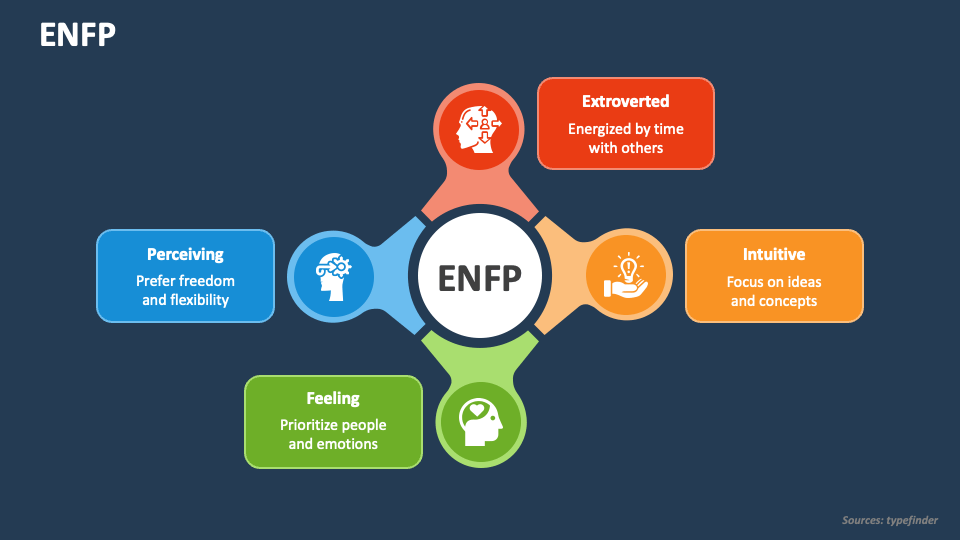
ENFP is a type from the Myers-Briggs model. The letters stand for:- Extravert
- -iNtuition
- Feeling
- Perceiving
 Source: NinjAthlete
This sounds familiar in HR conversations. Still, it’s wise to clarify one nuance right away. A preference is different from the behavior you see every day. Someone may have a preference for variety and yet plan meticulously, because the role requires it, because they’ve learned to do so, or because the environment demands it.
If you want to use the MBTI, use it as a tool for reflection. If you want to predict whether someone will perform well in a role, you need assessment tools that measure behavior on scales and compare it to normative groups. That distinction determines whether you use it for inspiration or for decision-making.
You can read more about the data-driven use of online questionnaires at hrmforce.com/online-assessments.
Source: NinjAthlete
This sounds familiar in HR conversations. Still, it’s wise to clarify one nuance right away. A preference is different from the behavior you see every day. Someone may have a preference for variety and yet plan meticulously, because the role requires it, because they’ve learned to do so, or because the environment demands it.
If you want to use the MBTI, use it as a tool for reflection. If you want to predict whether someone will perform well in a role, you need assessment tools that measure behavior on scales and compare it to normative groups. That distinction determines whether you use it for inspiration or for decision-making.
You can read more about the data-driven use of online questionnaires at hrmforce.com/online-assessments.
How do you recognize ENFP behavior in the workplace?
ENFP preferences are often evident in situations involving a lot of interaction, new stimuli, and room for ideas. Think of the initial phase of a project, a kick-off meeting with stakeholders, or building buy-in within a team. Common behaviors that managers identify in practice:- Quickly comes up with options, perspectives, and alternatives
- Makes connections easily and seeks collaboration
- Brings energy to meetings and group sessions
- Seeks meaning in work and goals
- May be less detail-oriented during long implementation phases

Why ENFP Is Not Suitable for Recruitment and Evaluation
In recruitment, you want answers to questions such as: Does this profile fit the job, its complexity, and the context? The MBTI-and therefore ENFP-works with categories. You get a type, but you lack a scale that shows the degree to which someone exhibits certain behaviors. Furthermore, you cannot reliably compare MBTI results with job levels or norm groups. This makes it difficult to base selection recommendations on them. In performance evaluation, another factor comes into play. A label can act as a stigma, causing managers to interpret behavior differently than it actually is. In practical terms, this leads to two risks. The first risk is a false match. Someone may seem sociable and energetic, but turns out to require a great deal of calm and precision in the role. The second risk is a false mismatch. Someone is labeled “unsuitable,” even though their behavior and results are perfectly fine.When ENFP Is Valuable in HR
ENFP can be valuable when used to facilitate dialogue. It helps employees articulate what energizes them, what distracts them, and where tension arises. This is particularly effective in coaching, team development, and leadership development. Examples of HR situations where ENFP language can help:- An onboarding conversation. What do you need to settle into your role?
- A development discussion. What do you want to gain more control over?
- A team session. Where do misunderstandings arise in collaboration?
- A career discussion. What kind of work environment suits you?
What are common pitfalls for ENFP profiles?
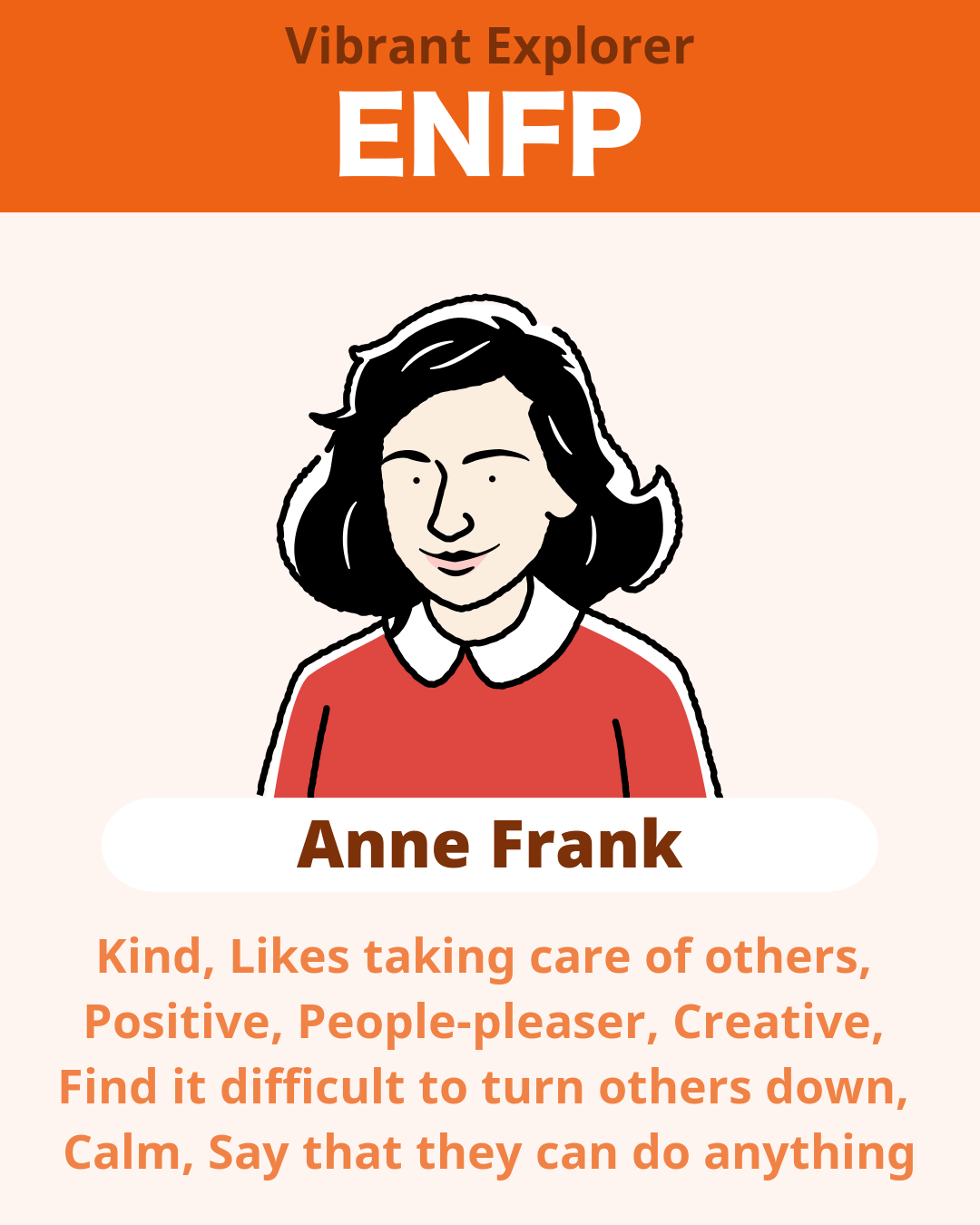
ENFP profiles are often associated with enthusiasm, connection, and creativity. That may be true, but HR also sees recurring pitfalls, especially when there’s high work pressure or a lack of structure. Pitfalls you can observe in behavior:- Starting many initiatives at once, causing a loss of focus
- Making plans but following through less consistently
- Finds repetition difficult, especially without a sense of purpose
- Reacts strongly to feedback from others
- Takes on too much out of enthusiasm
 Source: Hitostat
ENFP and leadership. When does it work, and when doesn’t it?
ENFP preferences can align well with leadership that revolves around connection, direction, and momentum. Think of teams that need to drive change, or departments that need to restore collaboration. At the same time, leadership also requires consistency. You have to stick to decisions, monitor priorities, and have difficult conversations. That’s often the difference between “inspiring” and “directive.” A practical check for HR and managers: observe behavior in three situations. How someone responds to resistance. How someone responds to setbacks. How someone handles routine tasks. That’s where you’ll see if their leadership remains stable.What approach helps HR translate ENFP into results?
Use a simple framework that you can apply in every conversation. It prevents vagueness and keeps the focus on behavior.Framework. Context. Behavior. Effect. Agreements
- Context: Describe the situation. When did it happen, with whom, and what was the pressure?
- Behavior: What exactly did you do? What did you say, and how did you act?
- Effect: What was the impact on planning, the team, and the results?
- Agreements: What will you do differently next time? What will you agree on with your manager or team?
How do you link ENFP to hrmforce without resorting to labeling?
If you use ENFP as a starting point in coaching or team discussions, you can then follow up with assessment data from HRMForce. This shifts the focus from recognition to substantiation. For example, you can combine personality data with motivators and cognitive abilities to see what someone is likely to demonstrate in a role and where there is potential for development. In the HR cycle, this works as follows in practice. You start with a conversation about preferences and collaboration. Then you purposefully administer a personality assessment or 360° feedback to reveal behavior in real-world situations. For more complex roles, you add a competency test, such as the Ability Scan. This way, you use ENFP as a framework while basing your decisions on measurable outcomes. This helps with selection, promotion, and development, and it makes your feedback cycle more consistent.How do you avoid stereotyping when someone says “ENFP”?
The quickest way is to immediately return to specific examples. Ask about a recent situation in which that behavior was evident. Also ask about a situation in which the opposite behavior was evident. This demonstrates that behavior varies and isn’t confined to a single label. Then use the same structure in every conversation: What was the context? What was the behavior? What was the effect? What agreement do you reach? This makes the process feel fair and ensures you’re focused on results.Which roles typically suit ENFP preferences, and which ones don’t?
It’s not about “being able to or not,” but about what gives someone energy and where risks arise. ENFP preferences often align with roles involving a lot of interaction, variety, and room for ideas, such as account management, internal communications, change management roles, project initiation, and stakeholder management. Roles involving prolonged detail-oriented work, strict compliance, and little variety can feel more taxing, especially if someone feels they have little room to maneuver. Think of management positions, lengthy administrative processes, or highly repetitive work. That doesn’t mean it’s impossible. It means you’ll need additional agreements regarding structure, priorities, and follow-up.FAQ on the ENFP Personality Type in HR
What does ENFP say about job performance? ENFP reflects preferences, not performance. Job performance also depends on skills, experience, motivation, role clarity, and the work environment. Can you use ENFP in job interviews? It’s best not to use ENFP as a selection criterion. At most, use it as a conversation starter, and base decisions on assessments that make behavior and potential measurable. Why do people identify so strongly with ENFP? Many MBTI descriptions are broadly and positively worded. People quickly identify with them, especially if they align with how they like to see themselves or how they want to work. Is ENFP the same as extraversion? No. Extraversion is just one preference within the type. ENFP also encompasses how someone processes information and makes choices, but it remains a typology. Can someone change types? When retested, some people change their MBTI type. This primarily shows that the model works with preferences and that context and timing have an influence. How do you discuss ENFP in a development conversation? By discussing situations in which certain behaviors were evident. Link this to goals and agree on follow-up, priorities, and collaboration. What’s a smart way to combine this with HRMForce? Use ENFP as a starting point for reflection, and then implement a personality assessment, 360° feedback, or competency test to make behavior and potential measurable. That’s when development becomes concrete.Here’s how to use ENFP wisely as an HR professional
ENFP provides a framework for understanding preferences, but it isn’t a basis for making definitive HR decisions. When used wisely, it actually helps open up the conversation and then allows for the targeted use of data.- Use ENFP as a conversation starter in coaching and team sessions
- Always ask for specific examples and situations
- Agree on focus, priorities, and follow-up
- Measure behavior and potential using assessments based on scales
- Document the results and discuss them as part of your feedback cycle
Put this insight into practice
Take the assessment directly, or discuss the right approach with a specialist.
Also interesting: Motivational drivers test · 360-degree feedback · DISC test