
 Floor Hendriks
DISC shows how people communicate, make decisions, and collaborate. But DISC’s greatest strength doesn’t lie in any one person-it emerges when different DISC colors complement each other. In this article, you’ll discover which DISC colors work well together, where tension arises, and how to make the most of those differences.
Want to brush up on what the DISC colors mean first? Then check out this article:

Similar DISC Colors: Easy Collaboration with Clear Pitfalls
Put it into practice
DISC test · from €94.00
Map behaviour, communication and collaboration.
When your behavior resembles that of your collaboration partner, pitfalls can arise.
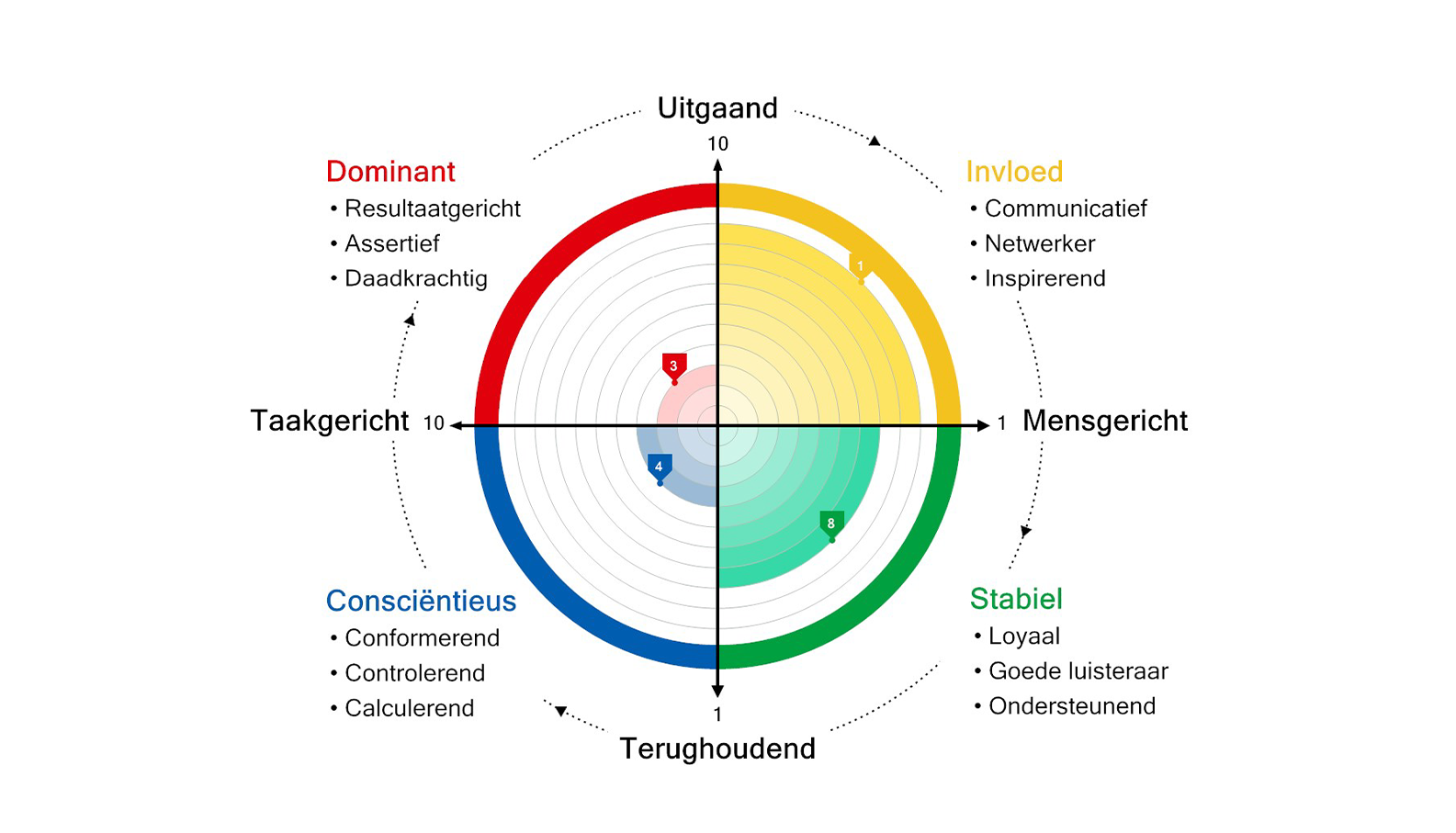
Red and Red
Two Red styles work quickly and purposefully. They value clarity, pace, and direct communication. In time-sensitive situations, this is a powerful combination. The pitfall: a power struggle. Both want to lead, which can lead to conflicts. There may also be insufficient attention to consensus and details.Yellow and yellow
Yellow and yellow bring energy, creativity, and optimism. Together, they generate countless ideas and create a lively atmosphere within a team. The pitfall: lack of follow-through. New ideas keep pouring in while ongoing projects are left unfinished.Green and green
Two green styles form a harmonious and secure partnership. They listen, support one another, and show loyalty. The pitfall: conflicts are avoided. Decisions take a long time, and change moves slowly.Blue and Blue
Blue and blue deliver quality, structure, and careful analysis. Mistakes are rarely made. The pitfall: “analysis paralysis.” Decisions can be delayed too long due to a drive for perfection.
Strong DISC Combinations: Different Styles That Complement Each Other
In a good team, people with different personality types complement each other.Red and Green
Red brings direction and pace, while green ensures support and attention to people. This makes the combination very strong for change initiatives. The tension: Red wants to move faster than green is comfortable with, while green wants more coordination than red has patience for. Balance is achieved through mutual understanding.Red and Blue
Red makes decisions; blue monitors quality and risks. Together, they ensure results that are both swift and well-thought-out. The tension: Blue sometimes finds Red too impulsive; Red finds Blue too slow.Yellow and Blue
Yellow brings ideas and inspiration; blue makes plans concrete and achievable. This combination is perfect for concept development and innovation. The tension: Yellow feels held back by critical questions; blue gets frustrated by a constant stream of new ideas.Yellow and Green
Yellow provides energy and momentum, while green fosters calm and collaboration. Teams feel both heard and inspired. The tension: Yellow sometimes moves too fast, while green often finds change too abrupt.Red and Yellow
This combination excels in communication, sales, and entrepreneurship. Red provides direction; yellow brings influence and enthusiasm. The tension: both sometimes lack structure and attention to detail.Green and Blue
Green focuses on people, blue on processes. Together, they create a reliable, stable way of working with clear agreements. The tension: blue can sometimes sound too critical, green too cautious.DISC opposites: where friction arises
Red versus green
Red is direct and task-oriented; green is indirect and people-oriented. Without insight, they can irritate each other, but with understanding, they complement each other perfectly. Red helps make decisions; green ensures others follow through.Yellow versus blue
Yellow thinks out loud, connects people, and improvises. Blue analyzes, plans, and monitors. Without insight, they clash quickly, but together they deliver creative and realistic solutions.Which DISC colors best suit certain goals?
Note: The information below is a guideline and does not always apply.For innovation and new ideas
Yellow for creativity, blue for feasibility, green for buy-in.For rapid change
Red for direction, blue for quality, green for communication.For stability and customer focus
Green for collaboration, blue for structure.For complex projects
Blue for analysis and planning, red for decision-making, green for team cohesion.How do you get the most out of DISC color differences?
1. Map out team members’ DISC profiles When people understand each other’s styles, mutual respect and better communication develop. 2. Use DISC as a language, not a label Don’t say: “You’re too critical.” Say: “You’re showing a lot of blue right now-can you explain the risks?” 3. Assign roles based on strengths Red for deadlines, yellow for communication, green for support, blue for planning. 4. Consciously balance teams Teams with only red and yellow lack structure. Teams with only green and blue lack momentum. 5. View tension as a useful signal Where there’s friction, there’s often exactly the quality you yourself lack. Differences aren’t a problem-they’re an opportunity. Find out here how to read a DISC report .Finally: Which DISC colors work best together?
There is no such thing as a perfect combination of DISC colors. It’s not about “right” or “wrong,” but about balance. Similar colors create comfort but are one-sided. Different colors create tension but deliver strength, innovation, and better decisions. Take the DISC test herePut this insight into practice
Take the assessment directly, or discuss the right approach with a specialist.
Also interesting: Personality test: Big Five · Motivational drivers test · 360-degree feedback