
 Floor Hendriks
Many organizations base their hiring decisions on resumes and experience, even though the real difference often lies in thinking skills. The Matrigma test
provides insight into abstract reasoning ability, a key predictor of success in many roles. In this article, you’ll discover what Matrigma measures, what it doesn’t, and how to use the test effectively as part of a broader assessment approach.

In short
Put it into practice
Cognitive ability test · from €74.00
Objectively measures working and thinking level and learning ability.
- Matrigma measures abstract reasoning ability through nonverbal patterns and figure sequences.
- The test is culture-neutral and suitable for international recruitment.
- Matrigma does not measure language skills, numerical reasoning, motivation, or work behavior.
- The test works best in combination with broader aptitude tests.
- For job suitability, combining it with other assessments is often necessary.
What is the Matrigma test, and what exactly does it measure?
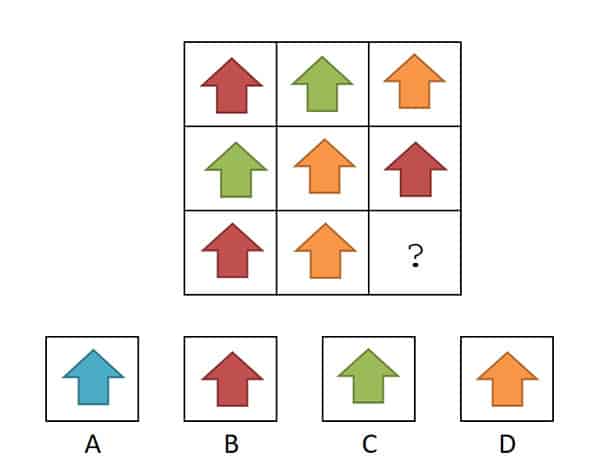
The Matrigma test is a nonverbal aptitude test that focuses on abstract logical thinking. Candidates are shown sequences of figures and must select the pattern that logically follows. No language is involved, and mathematical skills do not play a role. This test measures:- Pattern recognition
- Logical reasoning
- Problem-solving ability when faced with new challenges
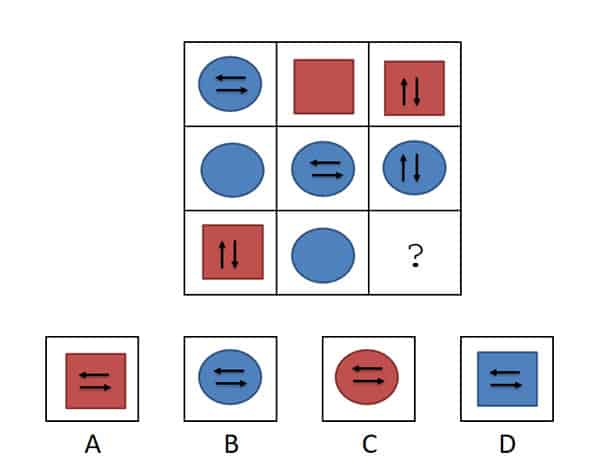
Is Matrigma an intelligence test or an aptitude test?
In an HR context, Matrigma is often referred to as an intelligence test. From a psychological perspective, it is more accurate to describe it as an aptitude test that measures a component of general intelligence. Matrigma focuses on abstract reasoning ability. This ability is related to the g-factor but does not represent all cognitive skills. Verbal interpretation, numerical insight, and practical reasoning ability are not assessed. Therefore, do not use Matrigma as the sole measure of intelligence. View it as a narrowly defined measurement tool within a broader context.When should you use the Matrigma test in recruitment?
Matrigma works particularly well for roles with high cognitive complexity. For example, when someone:- Must solve new problems without relying on set procedures
- Must quickly recognize patterns in unstructured information
- Must switch between abstract concepts
- Traineeships
- Analytical roles
- IT and data-related roles
- Management roles involving strategic issues
![Matrigma test oefenen – GRATIS voorbeelden & tips [2026]](https://www.jobtestprep.nl/media/d4enabfg/patroon-4-matrigma-constructie.png?format=webp) Source: Jobtestprep
Source: Jobtestprep
When is Matrigma insufficient as the sole assessment tool?
Many HR teams make the mistake of using Matrigma as a standalone selection tool. This increases the risk of a one-sided assessment. Matrigma does not assess:- Language comprehension and written communication
- Mathematical reasoning
- Work style and behavior
- Motivation and drivers
 Source: Hellotest
How does Matrigma compare to other aptitude tests?
The main difference lies in the breadth of what is measured. Matrigma:- Measures only abstract reasoning ability
- Is entirely nonverbal
- Focuses on a single cognitive domain
- Also measure verbal and numerical reasoning
- Provide a more complete picture of cognitive aptitude
- Are better aligned with practical job requirements
How do you interpret a low or high Matrigma score?
Matrigma scores always require context. A high score indicates a strong aptitude for abstract problem-solving. This is valuable for complex roles, but says nothing about motivation or practical application. A lower score often means:- Less preference for abstract puzzles
- A greater need for concrete frameworks
- Stronger performance in practical tasks
How do you combine Matrigma with other assessments?
The strength lies in combining assessments. Linking Matrigma to other tools creates a more complete profile. Common combinations:- Matrigma + broader aptitude test
- Matrigma + personality assessment
- Matrigma + motivation test
What about validity and predictive value?
Research shows that cognitive ability tests have strong predictive value for job performance. This also applies to tests that measure abstract reasoning ability. The predictive value increases when:- The test aligns with the complexity of the job
- You measure multiple cognitive domains
- The results are combined with behavioral data
What does Matrigma mean for the candidate experience?
Candidates often find Matrigma challenging and fair, as language and prior knowledge have little influence. At the same time, the test raises questions, especially in the event of a rejection. Transparency is therefore important. Explain in advance:- What the test measures
- Why you’re using it
- How the results are used
Frequently Asked Questions About the Matrigma Test
What does the Matrigma test measure? The test measures abstract reasoning ability through nonverbal figure sequences and patterns. Is Matrigma suitable for every position? No. The test is particularly suited for roles with high cognitive complexity and few routine tasks. Does the Matrigma test also measure numerical or verbal reasoning? No. Language and math skills are not part of the test. Can you use the Matrigma test as the sole selection tool? This is not recommended. The test measures a single cognitive aspect and lacks information on behavior and motivation. How long does the Matrigma test take? On average, about 40 minutes, depending on the version and the administration protocol. What does a low score indicate? A lower score often indicates a lower preference for abstract problem-solving, not low intelligence. How can you increase its predictive value? By combining Matrigma with broader aptitude tests and behavioral assessments.How to Use Matrigma Effectively
If you want to use Matrigma effectively in your selection process, follow these steps:- First, determine whether abstract thinking is truly relevant to the position.
- Never use Matrigma as the sole decision-making tool.
- Combine the results with a broader aptitude test.
- Include personality and motivation in your assessment.
- Clearly explain to candidates how you use the test.
Put this insight into practice
Take the assessment directly, or discuss the right approach with a specialist.
Also interesting: Personality test: Big Five · Motivational drivers test · 360-degree feedback