
 Floor Hendriks
 Many organizations use the Big Five personality model to gain a clear understanding of their employees’ personality traits. For example, this is done during the recruitment and selection of candidates, but also in talent and team development or when coaching current staff.
This model has been practically translated into competencies in the well-known Big Five personality test, but its foundation consists of five main dimensions. But what do abstract concepts such as “extraversion,” “neuroticism,” and “conscientiousness” actually mean in practice?
Many organizations use the Big Five personality model to gain a clear understanding of their employees’ personality traits. For example, this is done during the recruitment and selection of candidates, but also in talent and team development or when coaching current staff.
This model has been practically translated into competencies in the well-known Big Five personality test, but its foundation consists of five main dimensions. But what do abstract concepts such as “extraversion,” “neuroticism,” and “conscientiousness” actually mean in practice?
The Core of the Big 5 Personality Traits
Put it into practice
Personality test: Big Five · from €104.00
Personality translated into work-related competencies.
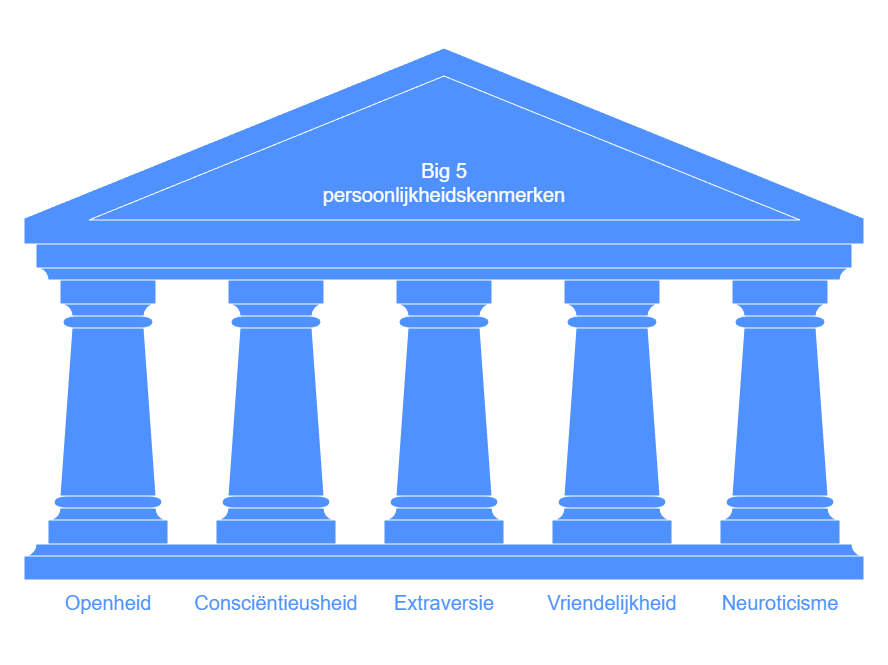
The Big Five personality model is one of the most widely accepted and scientifically grounded psychological models. Its foundations were laid as early as the 1930s. It wasn’t until the 1980s and 1990s that it was fully developed and gained widespread acceptance. At the heart of the model are five main dimensions:
- Openness to Experience
- Conscientiousness
- Extraversion
- Agreeableness
- Neuroticism
What do these traits mean in practice?
In this article, we’ll take a closer look at the five fundamental traits with practical examples of how you might encounter them in everyday life. Each example will feature someone who scores “higher” and someone who scores “lower.”1. Openness to Experience
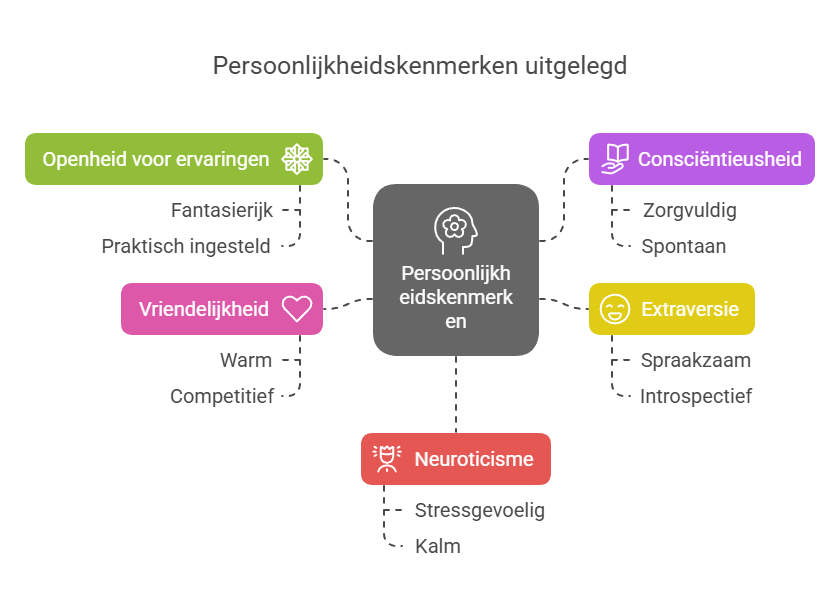
This trait describes the extent to which someone is open to change and new experiences . It also reflects the extent to which someone has a variety of interests. People who score high are often imaginative, curious , and appreciate art and innovation . People with a low score tend to be more practical, value traditions, and prefer predictability. Example: Lisa is a fashion designer who enjoys experimenting with new techniques and styles. She travels regularly to find inspiration for her work. Her colleague Mark prefers routine and feels most comfortable in familiar situations and structures. He prefers reading nonfiction books over fiction and likes to choose vacation destinations he already knows.2. Conscientiousness
This refers to the extent to which someone is organized , goal-oriented , and reliable . People who score high on this trait are often meticulous , disciplined , and plan ahead. Those with a low score, on the other hand, are often more spontaneous and less structured in their approach. Example: Project manager Emma likes to follow her work schedule meticulously. She creates detailed plans and keeps her to-do lists neatly organized. Her colleague Tom, on the other hand, is a last-minute worker who regularly procrastinates and often doesn’t start working on his projects until later. He needs those deadlines to perform well. https://nl.pinterest.com/pin/711428072366234320/3. Extraversion
This describes how sociable and energetic a person is. Extroverts draw energy from social interactions and are often talkative and assertive . Introverts feel more comfortable in a quieter environment and gain energy from solitary activities and introspection. Example: Things are always lively around account manager David. He loves to network, makes friends easily, and feels most at ease in a large group. His colleague Sophie is the opposite. She prefers to work in silence and would rather read a good book than attend a busy social gathering.4. Friendliness
This isn’t such an abstract concept, but it does mean more than just being “nice.” It indicates how accommodating , empathetic , and helpful someone is. People with a high score are often seen as warm , caring, and cooperative . People with a low score tend to be more competitive or may be more critical or skeptical. Example: Anna is always willing to help others. She often offers to support her coworkers and believes it’s important for everyone to feel appreciated. Her coworker Michael, on the other hand, is primarily focused on his own success and considers it less important to take others’ feelings into account.5. Neuroticism
This trait refers to a person’s emotional stability . People who score high experience stress, anxiety, and negative emotions more frequently. Those with a low score are generally calm, resilient, and emotionally stable. Example: Peter often worries about his work and overthinks minor details. He tends to find stressful situations overwhelming. His colleague Shirley usually remains calm, even in challenging circumstances. She handles setbacks well.
Conclusion and Further Information
The Big Five personality traits are a valuable guide for better understanding human behavior and individual differences. The model helps people better understand themselves and others and interact more effectively with others. In a Big50 Personality Test report, a person’s personality profile is translated into competencies (as a combination of knowledge, skills, and behavior). This is important for gaining insight into and managing personality traits and an individual’s skills. For each competency, an indication is provided of the extent to which an employee can develop that competency, based on their personality. The Big50 Personality Test is valuable for using objective data in employee development. It is the most widely used and researched personality theory for this purpose. Would you like to learn more about the Big5 model and frequently asked questions about it? Then read on in this article: Big Five Personality Model.Put this insight into practice
Take the assessment directly, or discuss the right approach with a specialist.
Also interesting: Motivational drivers test · 360-degree feedback · DISC test