
 Floor Hendriks
 With the growing tightness in the labor market and higher employee turnover at companies, employee retention has become a priority for organizations. It is incredibly important to an organization’s success, and turnover is costly: on average, 20% of a position’s annual salary.
In addition to well-known key factors for retention-such as job satisfaction, development opportunities, and recognition—the personal needs of individual employees are particularly decisive in keeping them engaged. Various assessments help prevent employee turnover and keep employees engaged longer while increasing their job satisfaction.
With the growing tightness in the labor market and higher employee turnover at companies, employee retention has become a priority for organizations. It is incredibly important to an organization’s success, and turnover is costly: on average, 20% of a position’s annual salary.
In addition to well-known key factors for retention-such as job satisfaction, development opportunities, and recognition—the personal needs of individual employees are particularly decisive in keeping them engaged. Various assessments help prevent employee turnover and keep employees engaged longer while increasing their job satisfaction.
Top Priority
Put it into practice
Motivational drivers test · from €74.00
Discover what motivates someone and gives energy.
With employee turnover reaching historically high levels, the focus on employee retention is growing. Having-and retaining-sufficient staff is becoming increasingly important for the success of organizations. Those who can recruit and retain the right people are already a significant step ahead of their competitors in this tight labor market.
Research by TNO also shows that a good balance between technology, sustainable employability, and employee development leads to a 25% improvement in performance and a 35% increase in motivation within an organization. In addition, higher employee engagement results in an average reduction in employee turnover of 25% to 65%.
Costs of Employee Turnover
Employee turnover also costs organizations a great deal of money due to replacement costs and the loss of expertise. Replacing an employee costs an average of 20% of their annual salary. For positions requiring specialized skills, this cost can be significantly higher. When calculated for the healthcare sector, the average cost per departing employee is €41,000. This figure includes only recruitment, onboarding, and temporary loss of productivity.Gaining Insight
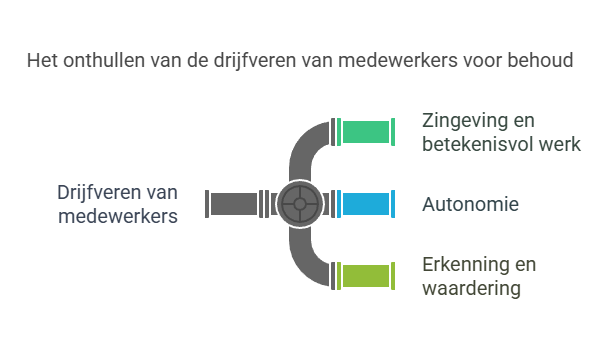
If you want to retain employees for longer, you need to know what motivates them and what they need-as well as how engaged they are with your organization. A number of general, basic factors for job satisfaction and employee retention are well-known, but there can be significant differences depending on the organization, industry, and individual employee. For example, while a sense of purpose (including for gifted individuals) and meaningful work may play a key role in healthcare or education, in other sectors or organizations, the focus might be more on autonomy or recognition and appreciation. Retaining staff starts with understanding the factors that are most important to your employees. Currently, expected turnover-and which employees are at high risk of leaving (and why)—remains a major “black hole” for many organizations because their motivations and needs are often not made transparent.
Key Metrics
While organizations currently invest a great deal of time and money in attracting the right people, they should actually be paying more attention to retaining talent in the long term. Ideally, right from the moment new employees join the organization, thought should be given to the best ways to keep people with the organization for as long as possible. To gain a better understanding of turnover risks and identify concrete action steps to promote greater job satisfaction and employee retention, various measurement tools are available. Such as: ✅ Engagement Scan Measures how engaged employees are to identify the risks of turnover early on. This is part of the Motivator Test at hrmforce. ✅ Motivation and Drive Analysis The Motivational Test mentioned above also reveals what employees truly value in their work. What role do salary, personal recognition, and, for example, development opportunities play? ✅ Personality Analysis A personality test such as the Big50 Personality Test helps to better understand what energizes people and what drains them. Valuable for greater self-insight and job satisfaction, as well as for promoting employee retention and personal growth. ✅Employee Retention Indicator This is a specific analysis that can predict which employees are at an increased risk of leaving. Various hrmforce assessments can be used individually or in combination to gain a complete picture of the factors that influence employee turnover. This can also be done anonymously.From Measurement to Action
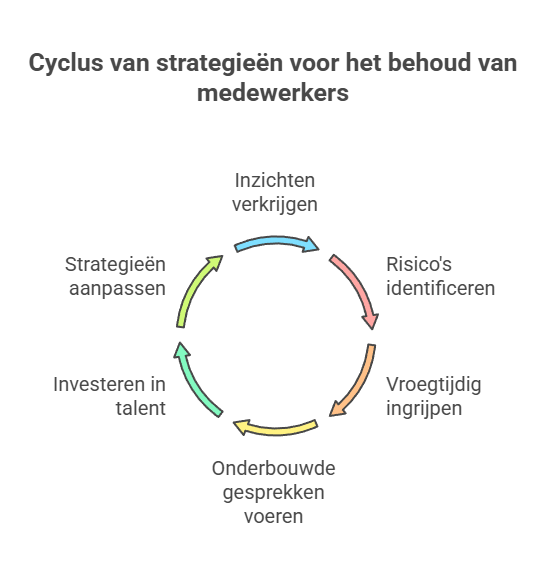
With these insights, an organization can take steps to improve employee retention. This allows you to identify risks early on and intervene promptly. Furthermore, you can then have data-driven discussions within the organization and make targeted investments in retaining key talent. A proactive approach to retaining employees usually consists of a mix of strategies, naturally tailored to the needs of the employees in your own organization. This can start with a warm welcome and proper onboarding of new employees, while for many employees, development opportunities and a good work-life balance are important. For older employees, a slightly different role or approach may be needed to retain them and continue to make the most of their skills. Therefore, in addition to generic options, take a close look at the needs of individual employees.
Note: Recognition and Appreciation
In addition to individual and organization-specific retention factors, recent studies also reveal interesting trends to consider in advance when it comes to employee retention. One key area of focus, for example, is the recognition and personal appreciation that employees experience. An analysis of nearly 3,500 employees in 2024 revealed that employees who receive a high level of recognition are as much as 45% less likely to leave within two years (research by ). These employees are also 65% less likely to actively look for another job. This underscores the importance of targeted and sincere appreciation in retaining talent.Other Factors
Furthermore, development opportunities, meaningful work, clear goals, and a safe and supportive work environment are among the frequently cited factors. Of course, competitive benefits can also play a role. Think of hybrid work arrangements, flexible work hours, or extra days off. These can be valuable tools for promoting job satisfaction and reducing turnover. Those who want to gain more insight into truly personal and organization-specific factors are best advised to start with assessments in the form of personal evaluations.Put this insight into practice
Take the assessment directly, or discuss the right approach with a specialist.
Also interesting: Personality test: Big Five · 360-degree feedback · DISC test