
 Floor Hendriks
[caption id="attachment_22144" align="aligncenter" width="732"]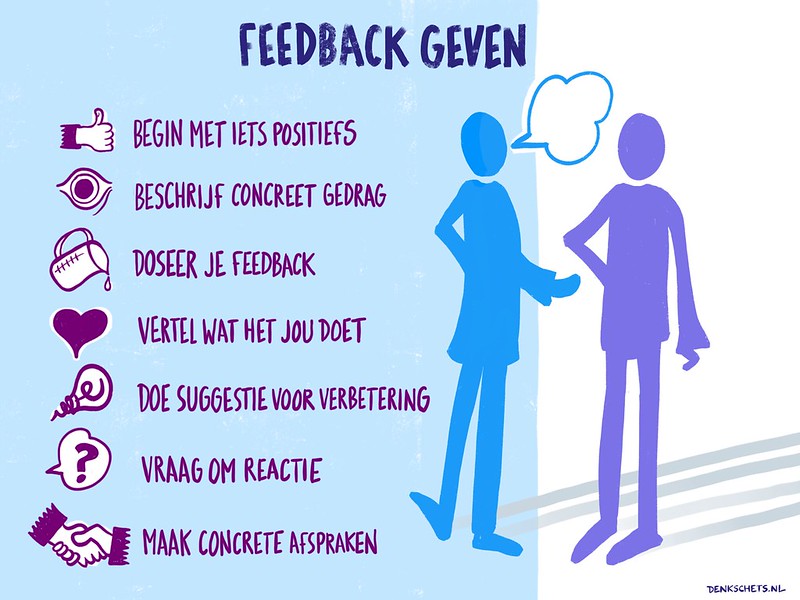 Source: Elcovs[/caption]
Giving a colleague feedback on their work style can be nerve-wracking and difficult. But it’s also an important part of professional collaboration. Fortunately, it doesn’t have to feel so “daunting” if you follow a few basic principles. That way, your feedback is more likely to be acted upon and can greatly contribute to personal growth, better team dynamics, and a positive work environment.
Source: Elcovs[/caption]
Giving a colleague feedback on their work style can be nerve-wracking and difficult. But it’s also an important part of professional collaboration. Fortunately, it doesn’t have to feel so “daunting” if you follow a few basic principles. That way, your feedback is more likely to be acted upon and can greatly contribute to personal growth, better team dynamics, and a positive work environment.
Source: Elcovs[/caption]
Giving a colleague feedback on their work style can be nerve-wracking and difficult. But it’s also an important part of professional collaboration. Fortunately, it doesn’t have to feel so “daunting” if you follow a few basic principles. That way, your feedback is more likely to be acted upon and can greatly contribute to personal growth, better team dynamics, and a positive work environment.
Why do we find it difficult to give feedback to colleagues?
Put it into practice
360-degree feedback · from €114.00
Feedback from colleagues, managers and clients.
Many people find it difficult to give feedback to others, especially in the workplace. Several factors can play a role here-from power dynamics or past disagreements to your own perspective on the situation.
The work environment itself or the timing may also not be suitable for engaging in dialogue. Ideally, giving feedback isn’t a one-way street, but a dialogue that also involves listening. Remote collaboration can also make it more complicated to give each other feedback in a constructive way.
Defensive Triggers
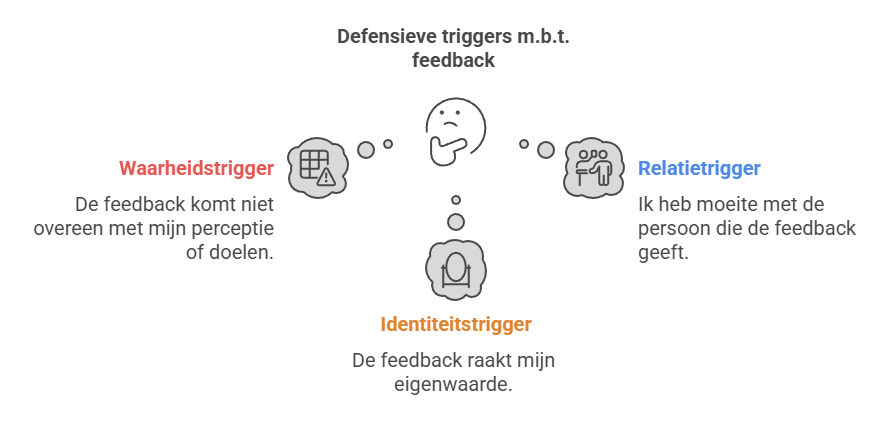
One of the biggest barriers is that people are naturally inclined to react defensively to feedback, even when it’s well-intentioned. This certainly plays a role in the workplace, which often feels less safe than a conversation at the dining room table at home. According to Harvard Law School, people mainly go on the defensive because of three triggers:- Truth triggers: the feedback doesn’t align with your own perception or goals.
- Relationship triggers: The recipient has issues with the person giving the feedback.
- Identity triggers: the feedback affects a person’s self-esteem.
How can you give constructive feedback to colleagues?
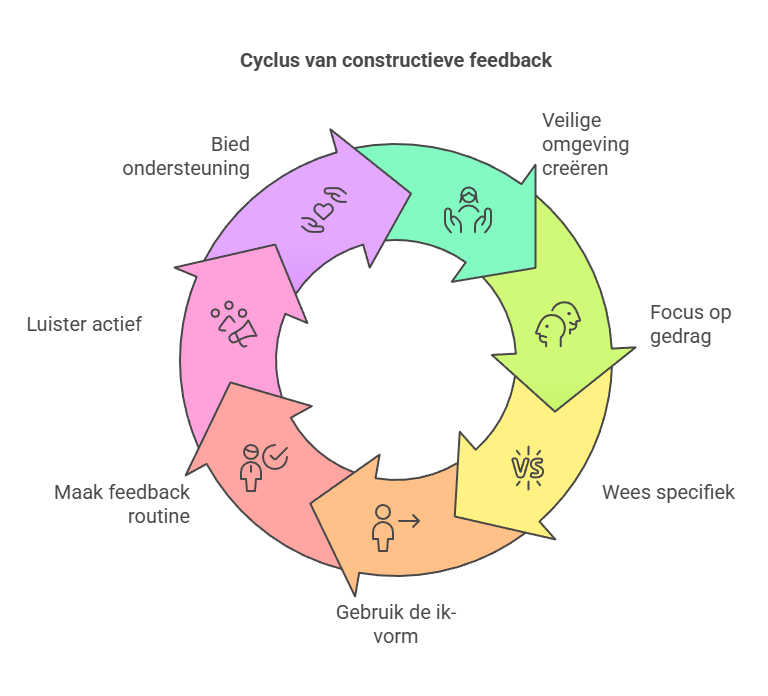
To give a colleague constructive feedback in the right way and to facilitate this effectively within organizations, there are several key considerations. Pay particular attention to these ten points.1. Create a safe environment
Before giving feedback, it’s important to create an environment where your colleague feels safe and valued. Choose a quiet moment when you can have the conversation together. This prevents your colleague from feeling attacked and promotes openness and honesty.2. Focus on behavior, not personality
Over the past few decades, a great deal of scientific research has been conducted on giving feedback in the workplace. A key conclusion is that feedback is only effective when it’s focused on the task level (what someone should do). Avoid personal feedback (don’t say, “You’re unqualified”) and focus on the behavior and the task (“You could try…”). In other words: focus on the issue, not the person.3. Be specific and clear
Be careful with overly general comments, such as: “You’re not doing well.” Be concrete and provide specific examples of behavior or situations that could be improved. For example: “During yesterday’s meeting, I noticed that you interrupted others several times. This made it difficult for others to make their point.”4. Use “I” statements
By giving feedback in the “I” form, you prevent a colleague from feeling attacked. For example, say: “I noticed that the report wasn’t turned in on time, which affected my schedule,” instead of: “You always turn in your work late.” So keep it task-oriented and personal.5. Make feedback a routine
Giving and receiving feedback can feel awkward at first. But together, you can make it a positive part of your work culture. By scheduling regular feedback sessions, giving and receiving feedback becomes the norm. This reduces stress and fosters collaboration on continuous improvement. Giving feedback no longer has to be “formal.” Organizations where feedback is regular, informal, and two-way perform better. Feedback must be embedded in the organizational culture, not just in annual performance reviews.6. Consider 360-degree feedback (recommended)
Organizations that want to make constructive feedback a permanent part of their culture can use the 360-degree feedback methodology and the accompanying 360-degree feedback questionnaire or assessment. This is a powerful tool for better leveraging employees’ potential and improving their performance. In this process, employees’ performance is evaluated by multiple people with whom they interact-such as their manager and colleagues, or sometimes even customers or suppliers. This provides a broader perspective and aligns well with remote collaboration. This feedback method is extremely valuable for managers and employees because it provides a clear and accessible overview of individual performance. Together, they can review the results and identify valuable areas for development.7. Avoid the “sandwich method”
To get off to a positive start and provide constructive feedback, it can be effective to first compliment someone, which conveys appreciation. But be careful not to sandwich areas for improvement between compliments-this can dilute the message. This is also known as the “sandwich method,” where the feedback is wrapped like a filling between two compliments (slices of bread). Be honest and direct, but remain respectful. This ensures clarity and prevents confusion.8. Follow a feedback method
There are various conversation methods for giving others constructive feedback that is structured, effective, and respectful. Here are some well-known approaches:- Situation-Behavior-Impact: Describe the situation, the specific behavior, and its impact to your colleague.
- I-I-You: Start with your own observation, share your feelings, and then ask for your colleague’s response.
- 4 G’s: Behavior-Feeling-Consequence-Desired Outcome: Describe the behavior, your own feelings about it, the consequence, and what you’d like to see in the future.
9. Listen actively and encourage dialogue
Ideally, feedback is not a one-way street. Give your colleague the space to respond and share his or her perspective. This promotes mutual understanding and can lead to joint solutions.10. Show commitment and offer support
Giving feedback is only the first step. Offer your colleague support to help bring about the desired changes. This can be done in various ways, depending on their development needs. If relevant, it’s a good idea to schedule a follow-up meeting right during the conversation to discuss progress. This also demonstrates your commitment and provides an opportunity to offer further support. Bonus tip: podcast on giving and receiving feedback
In conclusion: the value of 360-degree feedback
Do you want to systematically embed feedback in your organization? Then consider a 360-degree feedback assessment today. This method provides a comprehensive picture by gathering feedback from various perspectives and offers concrete guidance for development.
Get started with this effective approach today. Contact our specialists and discover how a 360-degree feedback assessment can take your organization to the next level.
Put this insight into practice
Take the assessment directly, or discuss the right approach with a specialist.
Also interesting: Personality test: Big Five · Motivational drivers test · DISC test