
 Floor Hendriks
You want to understand people better, help teams work together, and foster leadership. Many organizations turn to the MBTI
for this. The question is what this test really tells you and where its limitations lie in HR decision-making.
In short
- The MBTI is popular as a conversation starter in teams and coaching
- The model works with preferences and types, not with continuous scores on a scale
- MBTI is not a solid basis for selection and evaluation
- When retaken, people’s results often vary
- For data-driven HR, a Big Five-style approach is more suitable
What is MBTI and where does it come from?
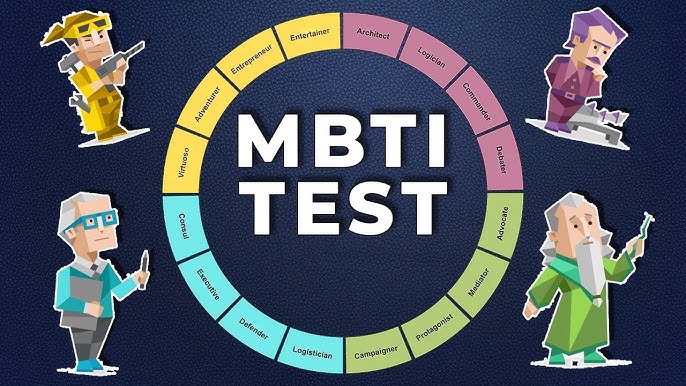
MBTI stands for Myers-Briggs Type Indicator. It is a questionnaire that classifies you into one of sixteen “types.” These types are derived from four pairs of preferences:- sensing versus intuition
- extraversion versus introversion
- thinking versus feeling
- and judging versus perceiving.
 Its roots lie with Carl Jung
. In 1921, Jung described psychological preferences as a way to explain differences between people. The MBTI is not a direct copy of Jung’s work. It is a later adaptation into a practical tool, developed by Katharine Cook Briggs and her daughter Isabel Briggs Myers. They wanted a model that would help people articulate differences in preference, particularly in collaboration and decision-making.
Its roots lie with Carl Jung
. In 1921, Jung described psychological preferences as a way to explain differences between people. The MBTI is not a direct copy of Jung’s work. It is a later adaptation into a practical tool, developed by Katharine Cook Briggs and her daughter Isabel Briggs Myers. They wanted a model that would help people articulate differences in preference, particularly in collaboration and decision-making.
 Source: Wikipedia
Important detail: The MBTI is a self-report assessment. You choose the option that best fits you each time. The result therefore says more about how you see yourself and how you perceive your preferences. That makes it useful for self-reflection.
It makes it less suitable for making firm decisions, because self-image, context, and the moment in time all play a role.
Source: Wikipedia
Important detail: The MBTI is a self-report assessment. You choose the option that best fits you each time. The result therefore says more about how you see yourself and how you perceive your preferences. That makes it useful for self-reflection.
It makes it less suitable for making firm decisions, because self-image, context, and the moment in time all play a role.
What exactly does the MBTI measure?
The MBTI measures preferences. Think about where your attention often goes, how you like to process information, and how you usually make choices. It does not measure skills, performance, or any “truth” about behavior. In the workplace, there’s often a difference between preferences and behavior. Someone can be an introvert and still give many presentations. That might be due to experience, job requirements, or training. The MBTI can help start that conversation. The MBTI cannot prove that someone is or isn’t suitable based on this alone.Why is the MBTI so popular in organizations?
The MBTI provides recognition and a common language. Teams recognize patterns and find it easier to discuss communication, collaboration, and irritations. The labels serve as a framework. This helps during team-building days, onboarding, or coaching. There’s also a risk in that success. Labels stick. Then you get statements like, “You’re just a P, so planning doesn’t work for you.” This locks behavior into place, even though behavior can often be developed in practice.![Opinion] Using The MBTI Test In The Workplace For Hiring Employees](https://vulcanpost.com/wp-content/uploads/2020/12/mbti-in-the-workplace-opinion-001.jpg)
How reliable is the MBTI if you take it again?
With the MBTI, you often see shifts when someone takes the questionnaire again later. This is partly due to the structure involving preference pairs. Many people don’t fall on one extreme or the other. In such cases, even a small shift in answers can result in a different label. This is an important consideration for HR. If a result changes, you should be cautious about drawing conclusions. Therefore, use the MBTI as a starting point for discussion. Do not use it as a decision-making rule.Can you use the MBTI for selection or evaluation?
For recruitment, promotion, or performance evaluation, the MBTI is a weak foundation. It does not provide a reliable prediction of job performance. Nor does it offer a stable comparison between candidates, because the model does not use a scale that allows you to accurately place someone’s score within a relevant normative group. There’s another factor to consider. In recruitment, you want to be able to explain why you’re making a choice. This works better with tools explicitly designed for HR decisions. Then you can focus on competencies, behavior, and potential for development.What often goes wrong with the MBTI in HR?
Here are four common mistakes I often see.- The type becomes a label instead of a conversation starter
- It’s used as proof, when it’s really meant to facilitate reflection
- Teams start making excuses instead of agreeing on what they’ll do differently
- No connection is made to observable behavior in the workplace
MBTI versus the Big Five. Why HR Often Shifts Its Focus
Big Five models describe personality as dimensions. For example, you score higher or lower on extraversion, conscientiousness, and emotional stability. This aligns better with how personality is typically approached in research. You don’t get an “on/off” label, but a nuanced profile. This is useful for HR because it makes it easier to make the connection to behavior and competencies. You can also make better comparisons within a relevant reference group, provided the tool uses norm groups.How can you use the MBTI effectively?
Use the MBTI in situations where you primarily want to focus on language and reflection. Think of team communication, collaboration, and coaching. Make it practical by establishing agreements on behavior. What will you do differently in meetings? Who will take on which role? How will you give feedback in a way that resonates? If you want to make decisions regarding hiring, promotion, or development, you’ll need assessment tools explicitly designed for those purposes. In that case, you’ll want to consider not only personality but also motivation, cognitive ability, and real-world feedback.The connection with hrmforce
At hrmforce, it’s all about behavioral insights that you can translate into actions in recruitment and development. You combine information from assessments and feedback so you don’t rely on a single label. This provides a solid foundation for discussions with candidates, employees, and managers. MBTI can serve as a starting point for establishing a common language within a team. For HR decisions, however, you’ll want to take a broader view. Consider personality data with reference groups, supplemented by 360-degree feedback and competency assessments. This gives you a well-founded picture that you can link to job requirements and development steps.FAQ
Is the MBTI suitable for recruitment? No. It’s best not to use the MBTI for recruitment, promotion, or performance evaluations. It is primarily intended for self-insight and discussion. Why does my type change when I retake the MBTI? Many people fall around the middle of a preference pair. Small differences in answers, context, or self-perception can then lead to a different label. Does that mean the MBTI is worthless? No. In team development, it can help make differences open to discussion. It only becomes a problem when you use it as a decision-making rule. What’s a better alternative for HR decisions? Look for tools that work with dimensions and normative groups, and combine that with feedback and performance data. Can the MBTI help with leadership? It can help as a reflection tool. It says little about leadership success, because preference isn’t the same as leadership behavior. How do I prevent pigeonholing in a team? Link every result to behavior. Agree on what you do want to see in collaboration. Repeat that in evaluations and feedback.Here’s how to approach it
If you want to use the MBTI in HR, stick to reflection and team communication. If you want to make decisions about hiring, career development, or role fit, use assessments designed for HR decisions and combine multiple data sources. Three steps you can take today. Choose one collaboration theme for your team, translate that into two concrete behavioral agreements, and after four weeks, use brief feedback to assess what has changed.Put this insight into practice
Take the assessment directly, or discuss the right approach with a specialist.
Also interesting: Personality test: Big Five · Motivational drivers test · 360-degree feedback