
 Floor Hendriks
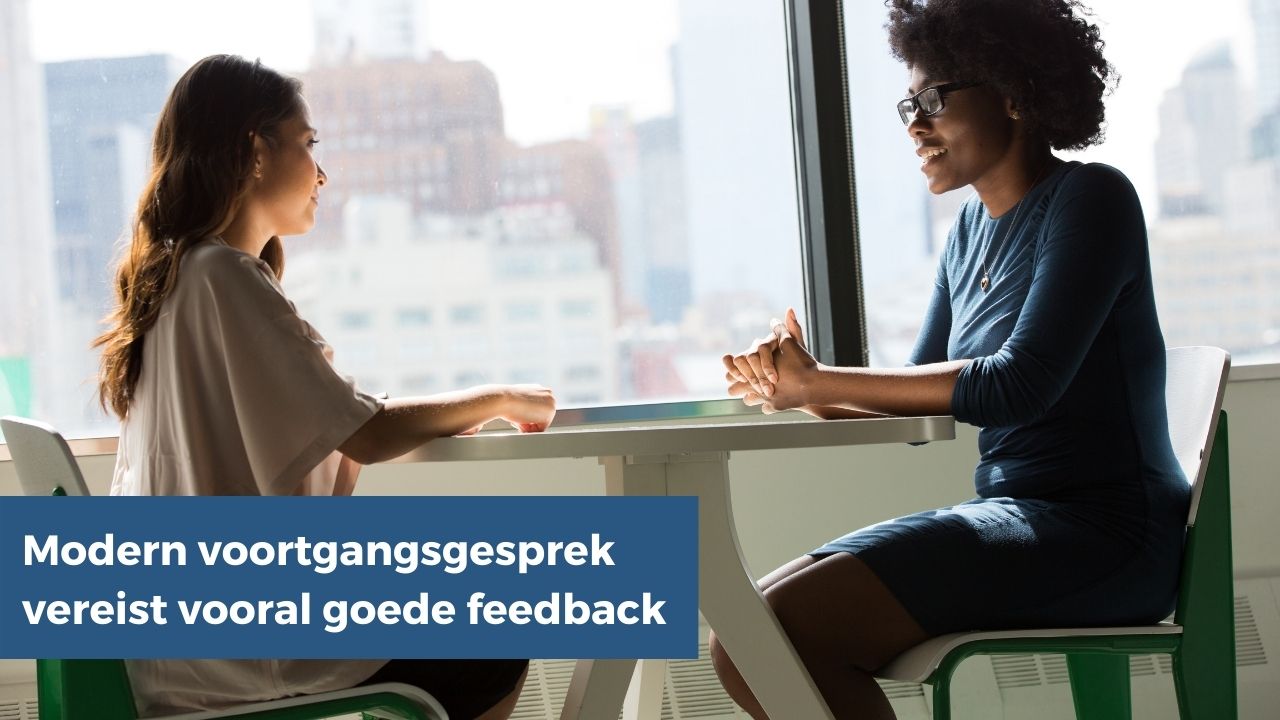 Many organizations and HR professionals are looking for ways to modernize their performance review cycle, transforming it into a more powerful tool with performance reviews that are truly valuable. Especially for employee development. This means placing greater emphasis on development discussions and coaching. But how do you do that? Key stepping stones include a more open dialogue, effective follow-up on outcomes, and an objective agenda for the discussions-for example, using 360-degree feedback.
The traditional approach falls short
Put it into practice
360-degree feedback · from €114.00
Feedback from colleagues, managers and clients.
The need to modernize the entire appraisal cycle with valuable progress or development discussions is a hot topic in industry publications. It sometimes also leads to heated discussions among HR professionals in various HR groups on LinkedIn. The traditional approach also costs a lot of time and money and often fails to deliver what it sets out to achieve, as a seven-year study at VU University Amsterdam has already shown. Researcher and HRM lecturer Kilian Wawoe advocates for a more modern approach with a greater focus on development through continuous, motivational coaching.
From Talking to Having a Meaningful Conversation
For many HR professionals, employers, and employees, the performance review is still synonymous with “evaluating performance.” And how do you move from simply “having a conversation” to a truly meaningful conversation about someone’s development? Managers often find this challenging. Key strategies for this include: thorough preparation, striving for genuine conversations as an open dialogue, establishing concrete agreements, and ensuring follow-up on these conversations-especially by making adjustments where necessary. All these steps actually require a single underlying foundation: objective data and feedback to start the dialogue and continue tracking development. This also makes it possible to move away from the traditional approach with three isolated moments per year (setting goals, discussing progress, and the performance review). After all, an annual bouquet of flowers on your wedding anniversary doesn’t make for a good marriage. Those who let go of that can allow the conversation cycle to evolve into a more accessible, continuous development dialogue between managers and employees-ideally featuring more frequent, brief check-ins that are primarily coaching in nature.360-Degree Feedback
There are various ways to make the performance review cycle more objective. Utilizing 360-degree feedback can already be a major step in this direction. After all, constructive feedback is essential for employee development. Feedback from employees themselves and from relevant people in their professional environment-such as managers, colleagues, (internal) clients, or other relevant parties-often turns out to be the “missing link” needed to improve the employee review cycle. For an entrepreneur or manager alone, it’s often difficult to evaluate employees, especially if, for example, you don’t see them all the time. And this is happening more and more often. In such cases, it makes sense to involve others who are closer to the employees and have their own perspective. Fortunately, this can be done in a simple and accessible way these days, for example, with hrmforce’s 360-degree feedback questionnaire. By drawing more broadly on employees’ work environment, performance and development opportunities are identified in a constructive and accessible way. The “360 degrees” represent the various perspectives from which feedback is received on, for example, skills, abilities, personality, and motivation. This provides a solid foundation for dialogue between employees and managers, as well as for progress discussions regarding development and related needs.Focus on personality? Big50!
During a personal development program, an employee’s personality can, of course, also play an important role. In such cases, a personality test like the Big Fifty (Big50) can be valuable for conducting discussions based on objective data. This is the most widely used (and researched) personality theory. The Big50 is valuable for translating a personality profile into competencies (to be further developed). For each competency, an indication is provided of the extent to which an employee can develop that competency. This is based on their personality and on the five key personality factors that influence behavior in work situations (Neuroticism, Extraversion, Openness, Conscientiousness, and Agreeableness).Consistency through honest conversations
The Development Module from hrmforce (which includes various digital review cycles) is valuable for effectively documenting concrete agreements and goals from reviews and for monitoring progress. This also contributes to the objectivity and continuity of the review cycle. Once the continuity and foundation for effective conversations are in place, the focus should then shift primarily to the conversations and interactions between the employee and the manager. Above all, this should be an open and honest dialogue in a safe conversational environment. In some organizations, a performance review is still primarily a one-way communication from the employer or manager. Being willing to listen and opening up to an open dialogue can provide them with highly valuable insights into the development of employees, teams, or the entire organization-including, for example, what is needed to achieve specific goals. In addition to openness in the dialogue, honesty is also crucial. Don’t beat around the bush-address issues directly and constructively. After all, not every employee is performing up to par. And sometimes someone has much more potential than they show. Or perhaps someone is setting the bar too high. During a performance review, an employee must also receive clarity and be told whether they are performing well, meeting their goals, and demonstrating effective behavior-especially if that is not the case. And in those discussions as well, measurable, objective data helps elevate the conversation directly to the appropriate level.More tips for a modern performance review cycle
Anyone who wants to prioritize talents, people, and their development must be able to flexibly tailor the development cycle accordingly. In this way, a one-sided process driven by the organization or a manager evolves into a more collaborative process involving coaching and development discussions. In this process, the manager and employee jointly set the goals and determine the course of action. They are also jointly responsible for these. The following are important steps in this process:-
Start the dialogue
-
Short-term performance agreements
-
From Judging to Developing
-
Organizational Tools
Put this insight into practice
Take the assessment directly, or discuss the right approach with a specialist.
Also interesting: Personality test: Big Five · Motivational drivers test · DISC test