
 Floor Hendriks
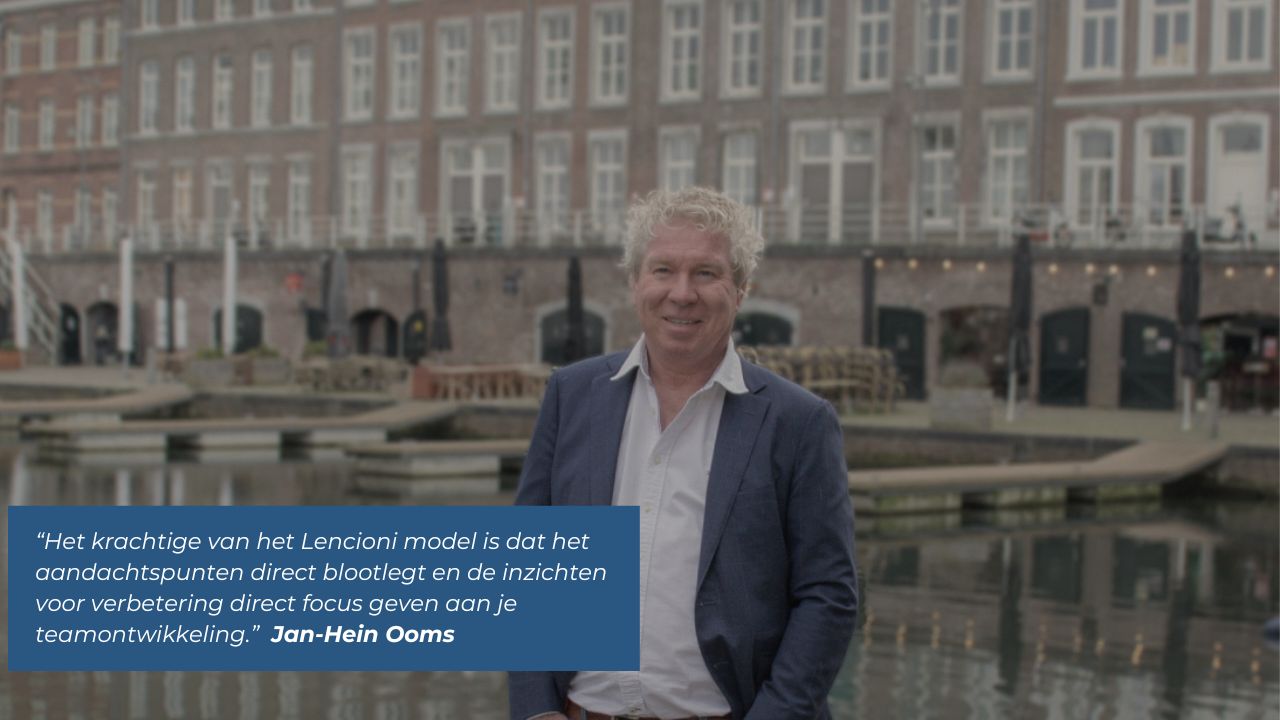 In organizational and team development, Lencioni’s model is a powerful tool for gaining better insights and more control over team performance. It starts with an assessment in which team members complete an online questionnaire. How is the team doing? To measure is to know: a perfect starting point. Then the real work begins! The team members get to work on the insights and areas for improvement. Our expert Jan-Hein Ooms explains how this works and what key points to focus on.
Model Provides Focus for Team Development
Put it into practice
360-degree feedback · from €114.00
Feedback from colleagues, managers and clients.
Effective team functioning is becoming increasingly important. Team development allows you to work on this in a targeted way. It starts with analyzing the team’s performance and the personalities within it. A leading model for this is Lencioni’s. At the heart of this are five characteristics that build up from the foundation (Trust) into a pyramid. The four subsequent focus areas are (constructive) Conflict, Commitment, Accountability, and Achieving Results together. “The power of this model lies in its ability to immediately identify areas for improvement and provide insights that directly guide your team development. Trust is the foundation here, as it is with so many things in life. The beauty of the pyramid is that the ‘higher’ you climb, the more you realize that you also need everything in the layers below. It may sound logical, but it’s often overlooked in team development, even though it’s very important,” says Ooms.
Applying Lencioni’s Insights
Organizations that use hrmforce’s online questionnaire for Lencioni Teamwork can also receive assistance after the scan in guiding team development and applying the insights gained. Hrmforce and Ooms work closely together on this. This guidance is an option, but certainly not a requirement. Organizations can therefore also use the questionnaire on its own and determine their own next steps. The model provides teams with insight and awareness regarding the qualities, characteristics, and pitfalls of team members. “Sometimes it can also be confrontational. For example, if team members differ significantly from the others in certain areas. That can actually be very interesting, because it may say something about their role or the functioning of the entire team. In any case, it’s a good starting point for the dialogue that follows, aimed at working together on team development.” Lencioni’s model comes from the book *The 5 Dysfunctions of a Team* by Patrick Lencioni. It’s not heavy reading and is actually very easy to get through. It’s like a novel about a CEO who has to lead an executive team that has become deeply divided. This, in turn, negatively affects the entire organization.Five Major Team Frustrations
As you read the book, the five major frustrations that team members struggle with are highlighted. These are relatable issues for many people who work with others. Here are the five frustrations, from the bottom to the top of the pyramid:- Lack of Trust
- Fear of Conflict
- Lack of Engagement
- Avoiding Responsibility
- Lack of Focus on Team Results
Key Requirements
Anyone who gains insight into the five key areas can work on them from a positive perspective. The approach is suitable for all organizations that want to get started with team development. Ooms: “In practice, I see many commercial companies using this approach, but that’s not a requirement. Non-commercial organizations-such as those in education-can also put it to excellent use. The model is always useful and always adds value to team development.” An important prerequisite is that the organizational or team culture be conducive to it. Ooms: “There must be-or must be created-some openness and transparency to get started with this. Team members must feel safe enough to be open. If a team member is a bit skeptical at first, that’s okay. That, in turn, can yield valuable insights and action items.” In addition, buy-in is an important prerequisite. “Team members must be open to working on their growth and development. That starts with buy-in at the top. You have to really want this and take action. It starts with leading by example.”Real-World Example: ING
Ooms himself gained extensive experience with Lencioni’s model at ING. With a background in business administration and health sciences, he worked at ING for many years. When the organization adopted a more agile way of working, Ooms spent years focusing on team development and leadership development among management teams. “As a result, I have many tools and methods at my disposal that allow teams to focus on specific areas for development. This can be done in all sorts of ways. For example, to start building mutual trust among team members, I’ve sometimes had them briefly present their own life stories using music, anecdotes, and photos. What emerged from this in such a short time was very interesting and immediately provided a lot of insight into shared norms and values. Team members quickly got to know each other better, and trust grew, allowing them to move up to the next levels in the pyramid.”Repeating the Online Survey
The power of online questionnaires lies in the fact that, in team development, they can be completed again at regular intervals to measure progress. “After the initial assessment, you start working on interventions and areas for improvement. But ideally, it doesn’t stop there. For example, you can repeat the scan every six months or year to see if the goals are being met and how the team is developing in the meantime. In addition to improvements in results or, for example, engagement, you might also notice that trust dips slightly at certain times. Why is that? You can discuss this together to ensure you continue to steer the entire development process effectively. Team development is not a short-term project. Team development is primarily focused on the long and medium term. You can always keep working on it by looking for ways to improve things.”Watch the Expert Session
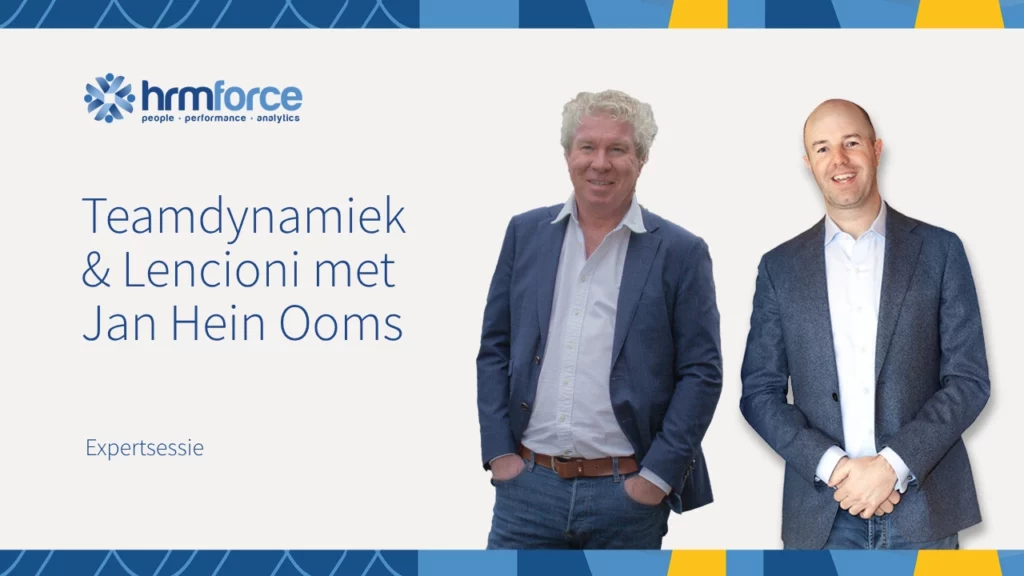
Are you interested in improving team dynamics and achieving top results within your organization? Then don’t miss our recent expert session with Jan Hein Ooms. In this engaging video, Ooms-drawing on his expertise in health sciences and business management-shares valuable insights into the Lencioni methodology and the importance of a strong foundation in teams. This session is a must-see for managers and team leaders who seek a deeper understanding of team dynamics and the application of the Lencioni model. Click here or on the image below to watch the video.
Put this insight into practice
Take the assessment directly, or discuss the right approach with a specialist.
Also interesting: Personality test: Big Five · Motivational drivers test · DISC test