
 Floor Hendriks
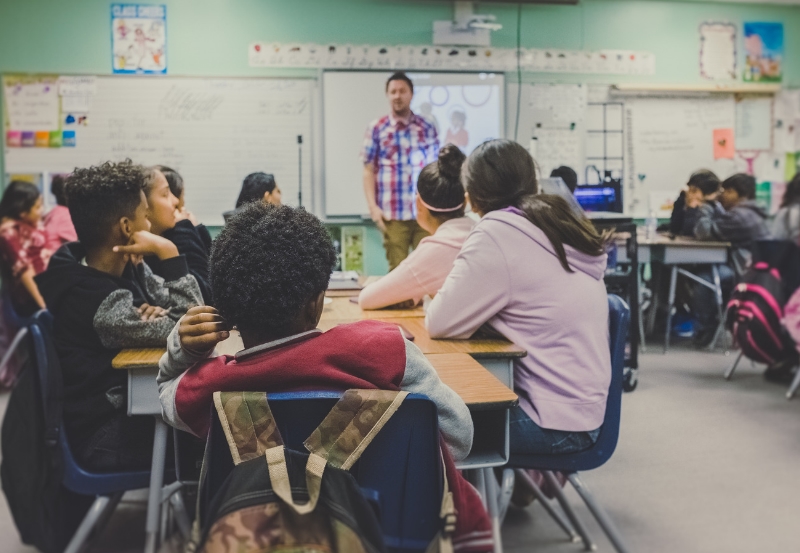 The seven teaching competencies-also known as SBL competencies-were formulated by the Foundation for Professional Quality in Teaching (SBL for short) and incorporated into the Education Professions Act (BIO Act). By clearly defining these competencies, it becomes easier to measure and further develop them. This provides schools with a high-quality tool for recruiting, selecting, and helping their teachers develop.
Hrmforce therefore uses these SBL competencies as the basis for its education-related assessments. This enables schools to efficiently and effectively recruit and select teachers who meet the established competency profile. Click here for more information about our assessment options in education.
The seven teaching competencies-also known as SBL competencies-were formulated by the Foundation for Professional Quality in Teaching (SBL for short) and incorporated into the Education Professions Act (BIO Act). By clearly defining these competencies, it becomes easier to measure and further develop them. This provides schools with a high-quality tool for recruiting, selecting, and helping their teachers develop.
Hrmforce therefore uses these SBL competencies as the basis for its education-related assessments. This enables schools to efficiently and effectively recruit and select teachers who meet the established competency profile. Click here for more information about our assessment options in education.
What has changed?
The main changes have been substantive improvements, making the competency requirements now unambiguous, concrete, and more easily assessable. The seven competencies are grouped under the main themes: subject-specific, subject-specific teaching, and pedagogical. This has increased their clarity. The competency requirements focus on student learning and the core of the teaching profession.
The SBL competencies are:
- Interpersonal Competence
- Pedagogically Competent
- Subject-Specific and Didactic Competence
- Organizational Competence
- Competent in Collaborating with Colleagues
- Competent in Collaborating with the Community
- Competent in Reflection and Professional Development
1. Interpersonal Competence
Creating a trusting atmosphere by interacting with students in a positive and open manner. Behaviors that may be associated with this:- treats students with respect
- knows his or her boundaries
- uses humor in situations and to resolve conflicts
- showing personal commitment to students
2. Pedagogically competent
Provides students with guidance and structure in a safe work environment so they can develop socially, emotionally, and morally. Behaviors that may be associated with pedagogical competence:- encourages desirable behavior in students
- teaches students to treat one another with respect
- Encourages students to think critically about their views and to express them
- values students’ contributions
3. Subject-matter and pedagogical competence
Helping students acquire the cultural and subject-specific knowledge necessary to function fully in society. Behaviors that may be associated with subject-specific and pedagogical competence:- can deliver the lesson material flawlessly
- uses play as a learning tool
- explains the lesson material clearly and concisely
- clearly explains the learning objectives of an activity
4. Organizational Competence
Ensuring a well-organized, orderly, and task-oriented atmosphere in the learning environment. Behaviors that may be associated with organizational competence:- follows a clear schedule
- improvises in a professional manner
- sets clear priorities
- is able to maintain order
5. Competent in Collaborating with Colleagues
Making a professional contribution to a positive pedagogical and didactic environment, to effective collaboration among colleagues, and to effective school organization. Behaviors that may be associated with this:- asks colleagues for help
- offers help to colleagues
- exchanges information with colleagues on their own initiative
- makes a constructive contribution to various forms of consultation
6. Competent in Collaborating with the Community
Ensuring effective communication and coordination with parents and other stakeholders involved in students’ education and development. Behaviors that may be associated with this:- actively seeks contact with parents and other stakeholders
- explains his or her approach to parents and other stakeholders
- Builds relationships with other educational institutions
- adopts a constructive and open attitude in interactions with parents and other stakeholders
7. Competent in Reflection and Development
Regularly reflecting on and developing personal and professional competence. Behaviors that may be associated with the Reflection and Development competency:- Being able to receive (critical) feedback
- developing oneself with the help of feedback from others
- learning from one’s mistakes
- participating in training and educational programs
Put this insight into practice
Take the assessment directly, or discuss the right approach with a specialist.
Also interesting: Personality test: Big Five · Motivational drivers test · 360-degree feedback