
 Floor Hendriks
Drives and Motivation: A Good Pair
Put it into practice
Motivational drivers test · from €74.00
Discover what motivates someone and gives energy.
Motivation: “Inner drive, reason for action”—these are some of the definitions for this word. Essentially, they all boil down to the same thing: motivations determine why someone does something. What drives a person? Why does one person enjoy their work while another does not? In this article, we’ll take an in-depth look at why some employees are more motivated than others, what causes this, and to what extent it’s related to a person’s personal motivations.
Motivations are personal
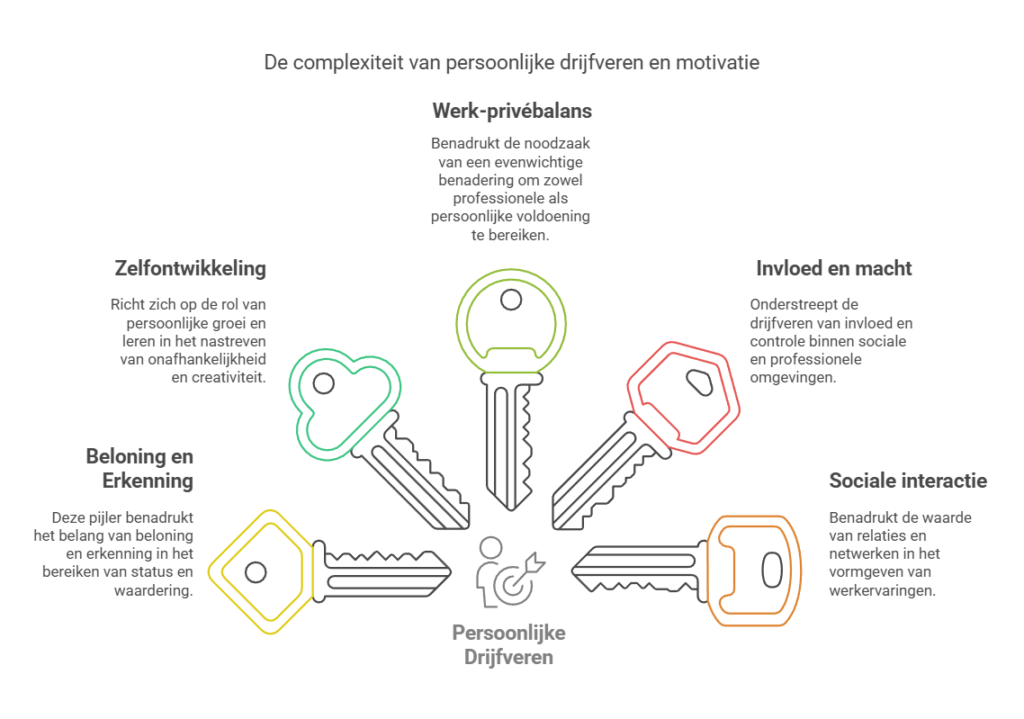
Every person is an individual, and that also applies to their motivations. When we limit our focus to the workplace, for example, it turns out that people go to work for very different reasons. “I do it purely for the money,” says one person. “The interaction with my coworkers,” replies another. “To further my personal development,” adds yet another. There are many more motivations like these.Different Motivations
The main motivations that are identified are: compensation, status, power, recognition, independence, ideals, self-development, creativity, working conditions, social contacts, security, structure, influence, variety, and a work-life balance. In short, a whole range of motivations that are often applied in combination. For example, income is linked to status and recognition, or self-development to creativity and independence.
Not everyone knows their motivations
While some people know exactly what drives them, others have little or no idea. Of course, they too have motivations, but they aren’t truly aware of them. Things are done because that’s the way it’s supposed to be, because people wouldn’t know how to do it any other way. This isn’t necessarily a bad thing. After all, it’s not always necessary to ask yourself why things are done the way they are-especially if someone feels comfortable with that. On the other hand, for some people, this does lead to an identity crisis, and they find themselves desperately asking, “Why do I actually do what I do?” In that case, it’s advisable to take a thorough look into it. Discover Your MotivationsDiscovering your drives requires an individualized approach
It should be clear by now that different drives are by no means a one-size-fits-all proposition. Moreover, they aren’t equally clear to everyone. Even for employers and HR managers, figuring out exactly what drives a person can be quite a puzzle. It requires an individualized approach. Those who think in generalities will be disappointed. Are employees suddenly more motivated when, for example, they’re offered a pay raise or better benefits? Or is there more to it than that? This presents a challenge for HR managers and supervisors. As we’ve seen, compensation is an important-even decisive-motivator for some employees, while others value a better workplace atmosphere, more variety, or a better work-life balance.The Link Between Motivators and Motivation
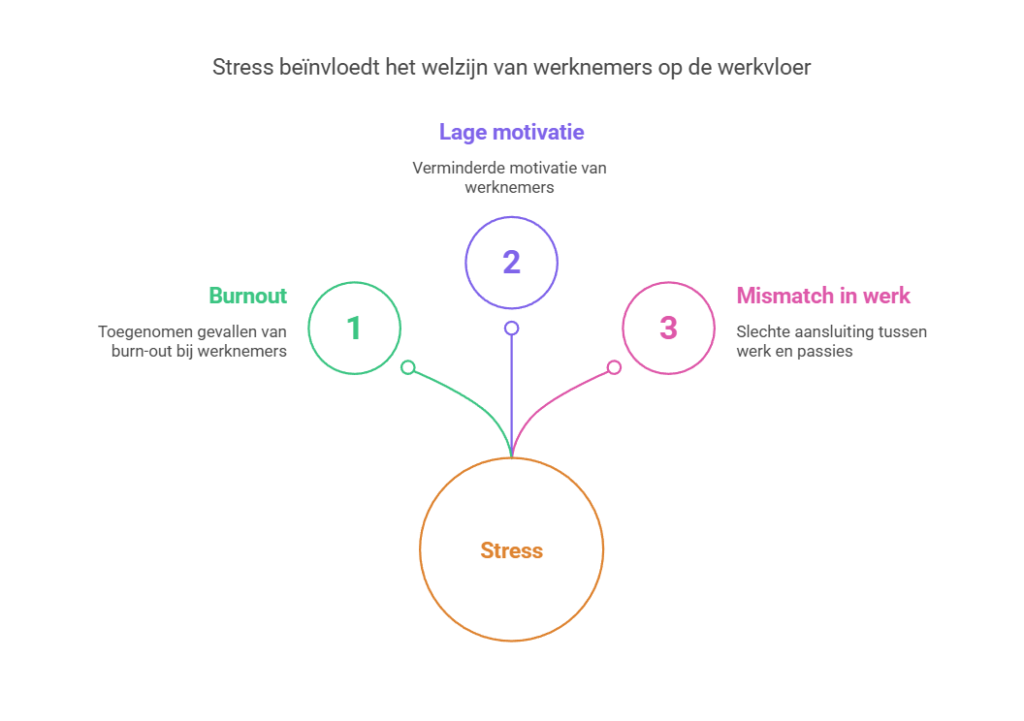
Although working conditions in the Netherlands are generally not that bad, research by the Ministry of Social Affairs shows that stress is a major cause of absenteeism due to illness. In addition, a significant portion of the working population reports struggling with burnout symptoms (approximately 1 million people). The happiest employees often turn out to be those whose work aligns well with their motivations. They are usually also much more motivated because they are essentially doing exactly what they were born to do.
Motivations Can Change
However, motivations can change over time. They may suddenly become much less prominent than they once were. Consider an employee who has always assumed that compensation and status were the primary motivators, but who, despite a great job and an excellent salary, is still not entirely happy with his career. Deep down, personal motivations are calling for attention. For example, the employee realizes that he has actually always wanted to make a difference for humanity, but because of his focus on income and status, that has completely fallen by the wayside. When that realization sinks in, this person may be able to explain for himself why he or she is less motivated. Often, however, employees have no idea why they’re dissatisfied. In such cases, it’s important to figure out which motivators are actually at play. Taking a motivator test can be an excellent tool for this. Discover Your MotivatorsBoosting Motivation
Every company or organization benefits from having motivated employees. This leads to better results and a reduction in absenteeism due to illness. HR managers have an important role to play here: ensuring that the number of motivated employees is optimized. As we saw earlier, employees feel their best when their motivators align with their work. That’s why it’s important to identify the various motivators within your workforce. Based on this data, you can then assess to what extent each individual employee’s job responsibilities or work situation can be aligned as closely as possible with their motivations.Motivations Test
An important tool developed by hrmforce that can help you with this is the motivation assessment . It analyzes both the factors that are motivating and those that are not. In this way, this motivation assessment identifies personal drives and helps employees understand not only what increases their motivation but also what decreases it. Are you interested in administering a motivation test? Please contact us for more information.Frequently Asked Questions About Motivators
- How can a company effectively identify and measure the specific motivators of its employees? Companies can use tools such as psychometric tests, surveys, and one-on-one interviews to identify and measure employees’ motivators. Regular feedback and discussions about career goals also provide valuable insights.
- What are best practices for aligning organizational goals with the motivators of individual employees? Best practices include aligning job roles with employee motivation, offering personalized development plans, and ensuring clear communication about how their work contributes to broader organizational goals
- How often should an employee’s motivators be reassessed, and what factors indicate a need for reassessment? It is recommended to reassess employees’ motivators annually or at key career milestones. Factors such as changes in performance, engagement, or dissatisfaction may indicate a need for reassessment.
Put this insight into practice
Take the assessment directly, or discuss the right approach with a specialist.
Also interesting: Personality test: Big Five · 360-degree feedback · DISC test