
 Floor Hendriks
 It is a key predictor of success. And the great thing is that EQ can be developed. That’s why measuring it is valuable not only when recruiting candidates but also when further developing existing employees and teams. These days, it’s easy to measure using an EQ questionnaire.
What exactly is emotional intelligence?
The Rapid Rise of EQ
Most employers and employees now view emotional intelligence as an indispensable skill, according to recent research by Capgemini. To be precise, 74 percent of employers and 58 percent of non-managers consider it an indispensable skill. The consulting firm advises employers to build an emotionally intelligent workforce. “This benefits both organizations and employees. To foster an emotionally intelligent workforce, employers must adapt existing training programs and make them accessible to everyone, adjust hiring processes, and apply an EQ lens when promoting and rewarding talent,” according to Capgemini. Furthermore, attention to EQ is expected to increase sixfold over the next five years. This is also closely linked to digital transformation, as EQ in particular is difficult to replace with automation or artificial intelligence (AI).What are the benefits of a higher EQ?
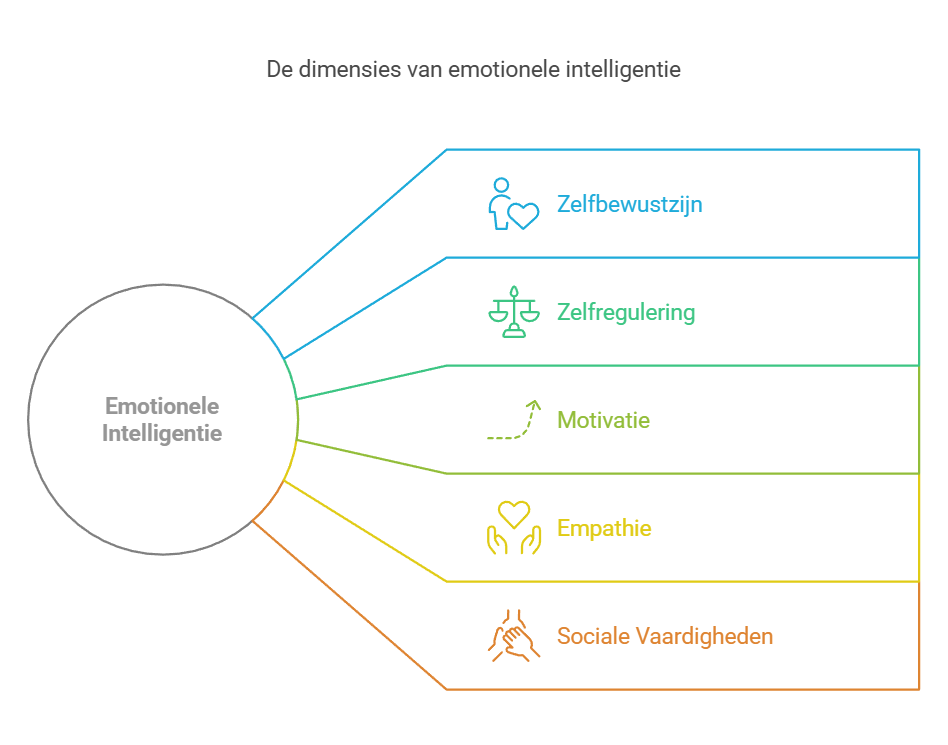
Key benefits of a higher EQ include improved collaboration among employees and greater job satisfaction. It fosters greater self-awareness and better self-regulation (the ability to control and redirect disruptive impulses and emotions). This is valuable, for example, when facing changes in the work environment. Other benefits include higher employee motivation and greater empathy in the workplace (understanding others and taking their feelings into account). Meanwhile, better social skills can help build connections with others to guide them in a certain direction. This is valuable, among other things, for (personal) leadership and team building.How can you measure EQ?
Due to the growing understanding of the importance of EQ, organizations are increasingly seeking to measure it among job applicants or for development purposes among existing employees, managers, or executive teams. This can be done relatively easily with an EQ questionnaire, possibly in conjunction with other tests or assessments that provide further insight into a person’s personality, motivations, or cognitive abilities. Based on current scientific insights, hrmforce has conducted its own research into personal characteristics that are strongly related to emotional intelligence. This has led to the development of our own assessment, which takes about ten minutes to complete. The Emotional Intelligence report then provides immediate insight with an overall score (from 0 to 100 percent) and, even more interestingly, scores on various subscales (on a scale of 1 to 10). These include, for example, scores in the areas of: emotion perception, emotion management, emotion regulation, self-motivation, social awareness, optimism, and self-confidence. These concepts are also explained in the report. The purpose of the report is to provide insight into the current situation in order to stimulate personal growth. After all, all these elements can be developed and changed. The results are valuable within the overall competency overview and important for the development of various competencies. More about hrmforce’s EQ Questionnaire is covered in a recent vlog on this topic.Applying Insights in Practice
There are various reasons to administer the EQ questionnaire to current employees or job applicants. In addition to predicting success, it offers valuable insights for further developing key skills in individual employees. But it can also be useful for team development, which is becoming increasingly important. Or, conversely, when recruiting lateral hires from other professions. In the latter case, a quick assessment of competencies (Competency Check) is desired, but above all, an understanding of the person and their motivation. For this purpose, hrmforce also offers the Motivation Test and the Personality Test (Big50), among other tools. Finally, short tests such as the EQ questionnaire serve as a valuable starting point for dialogue between employees and managers and for improving “the good conversation” between them. This can make the constructive conversation even better—for example, as part of a modern feedback cycle that includes more frequent brief check-ins as part of the ongoing dialogue between employees and managers.EQ in 2025: Even More Relevant in an Increasingly Digital World
By 2025, emotional intelligence will have become one of the most sought-after competencies in the job market. As (AI) systems take over more and more routine and analytical tasks, employees with high EQ will distinguish themselves through their interpersonal skills.
More organizations are now investing in EQ development programs. The latest EQ assessments not only measure self-reports but also analyze voice patterns, facial expressions, and heart rate during interactions.
In the hybrid work environment of 2025, digital empathy and online emotional leadership have become critical skills. Leaders who can pick up on emotional cues-even through digital channels-demonstrably create more engaged and productive teams.
Put this insight into practice
Take the assessment directly, or discuss the right approach with a specialist.
Also interesting: Personality test: Big Five · Motivational drivers test · 360-degree feedback